 Physix Frontier
Governance Dividend is the Real Moat for the AI Safety Sector

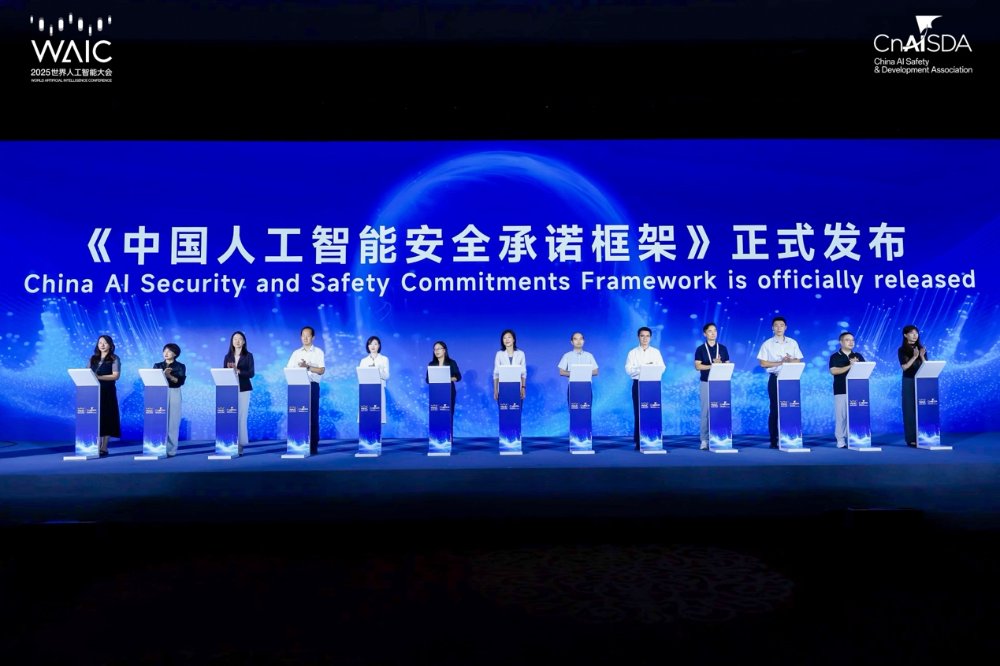
I noticed an interesting detail: The theme of this year's WAIC shifted from previous years' "Technological Breakthroughs" to "Intelligent Partners, Co-Creating the Future," and the "High-Level Meeting on Global Governance of Artificial Intelligence" was written into the official name of the conference. This adjustment in wording essentially signifies that the AI industry has entered a "rule-led" phase from the "wild growth" stage.
As a security vendor, Qi An Xin concentrating on showcasing its "AI + Security" dual-wheel drive layout at this node is very precise timing. As an investor, what I care about isn't how many products were exhibited, but that it is betting on the switch of the industry's underlying logic—AI security has changed from an "optional item" to a "mandatory compliance item."
Short Term: Product Matrix is Just Surface, Customer Willingness to Pay is Key
First, let's look at the information released by Qi An Xin at the expo:
- Core Products: AI security detection, AI application protection, AI model security assessment series
- Scenario Coverage: Data security for large model training, compliance of generated content, defense against model poisoning
- Actions Taken: Roundtable discussions on formulating AI governance standards
In the short term, these products target regulatory requirements expected to land densely in the second half of the year. Rumors of the 2025 Interim Measures for the Management of Generative Artificial Intelligence Services draft upgrading to formal regulations, plus the second phase enforcement of the EU AI Act, mean the compliance pressure on enterprises is real.
I used a simple table to compare the market drivers of traditional cybersecurity and AI security:
| Dimension | Traditional Cybersecurity | AI Security |
|---|---|---|
| Demand Trigger | Attack-event driven | Compliance-event driven |
| Customer Willingness to Pay | Medium-Low (only looking at incurred losses) | High (fear of regulatory penalties + brand reputation) |
| Procurement Decision Chain | Security Department | Legal + Business + Security tripartite |
| Average Ticket Size Range | 100k-1M RMB/year | Estimated 500k-5M RMB/year |
Key Judgment: Customer willingness to pay for AI security is much higher than for traditional security, because enterprises have already spent millions or even tens of millions on large model investments and won't let previous efforts go to waste due to security vulnerabilities. Qi An Xin's current product matrix covers the full chain from training to inference; this layout direction is correct.
However, short-term risks exist: Currently, the AI security market is still in its early stages, and most customers are still in a "wait-and-see" rather than "procurement" phase. Qi An Xin needs to prove it can convert concepts into contract revenue; otherwise, it's again "applause but no sales."
Long Term: Competitive Moats Lie Between "Governance Standards" and "Data Accumulation"
The competitive landscape of AI security is completely different from traditional security. In traditional security, there are multiple players like 360, Sangfor, and NSFOCUS sharing the pie, but AI security is a new market where everyone stands at the same starting line. The real moat isn't technical parameters, but:
1. Ability to Participate in Formulating Governance Standards
Qi An Xin appearing at WAIC roundtables indicates it is already striving to become a rule participant. If it can lead or deeply participate in formulating industry standards (e.g., AI model security assessment standards, norms for labeling generated content), subsequent productization will form a de facto "entry barrier."
2. Time Window for Attack Data Accumulation
The core capability of AI security is identifying novel threats like adversarial samples, poisoning attacks, and jailbreak attacks. This requires attack data from real scenarios to train models. Qi An Xin's early customer base in government and enterprise markets gives it a natural advantage in data acquisition—Whoever accumulates over 100,000 AI attack samples first can widen the gap in algorithms.
3. Game with Cloud Platforms
Alibaba Cloud, Huawei Cloud, and Baidu Cloud are all promoting their own AI security solutions. As an independent third party, Qi An Xin's advantage is neutrality (customers don't need to worry about data being locked in by cloud vendors), but its disadvantage is the lack of cloud-native integration entry points. In the long run, it must form deep cooperative relationships with at least two top cloud vendors, or it will be marginalized by the ecosystem.
Investment Judgment: Valuation Logic Needs Re-anchoring
If you view Qi An Xin as a cybersecurity company, valuing it at PS 5-8x is reasonable currently. But the AI security business should be valued separately:
- Traditional Security Business: Stable growth but obvious ceiling (annual growth rate 10-15%)
- AI Security Business: Expected to contribute 5-8% of total revenue in 2026, but growth rate predicted to exceed 200%
- Valuation Logic: Give a premium to the AI security part at SaaS company PS 15-20x
Currently, Qi An Xin's investment in this direction belongs to a "strategic loss period." We need to observe three key indicators:
- Whether gross margin is higher than traditional security (target should exceed 70%)
- Customer renewal rate (target exceeds 90%)
- How many industry standards it participates in formulating (quantitative indicator: leads drafting at least 2+)
```
The AI security market is expected to reach the hundred-billion level by 2027, and Qi An Xin has already seized the initiative of "governance discourse power" in this track. But the ones who finally win won't be those with the most complete products, but teams that can convert "compliance demand" into "subscription revenue."
My Prediction: Within the next 18 months, there will be a reshuffle in the AI security track. Security vendors that can simultaneously secure "national-level governance projects" and "top cloud vendor channels" will occupy over 80% of the market share. If Qi An Xin can secure at least one ministry-level AI security governance pilot by the end of 2026, its valuation system will switch from "cybersecurity company" to "AI infrastructure security platform," and the PS multiple is expected to double at that time.
(Investment carries risks. This article does not constitute specific investment advice. All data is based on deductions from public information.)
Original link: https://www.leiphone.com/category/industrynews/lxXkqwf4vc9J3opM.html