 Physix Frontier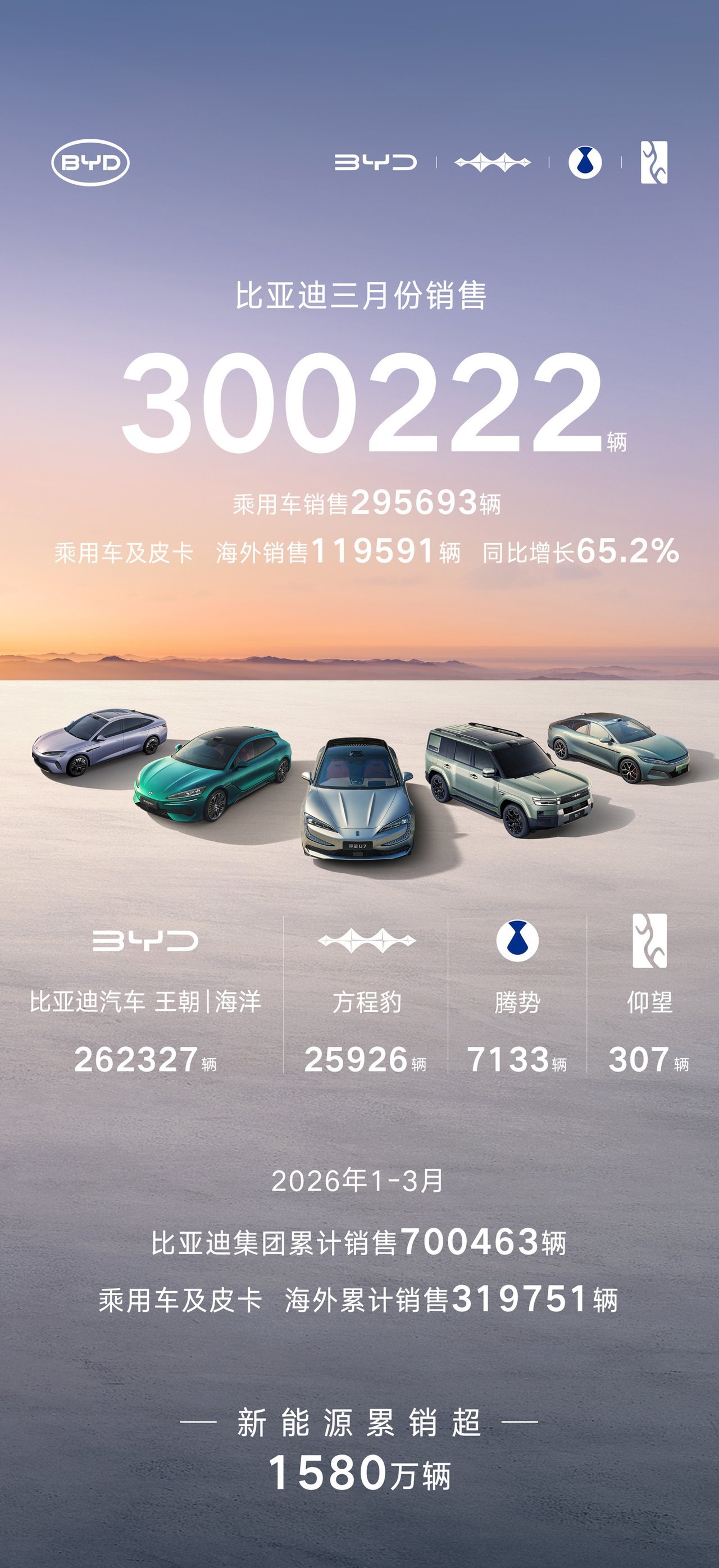
BYD's 'God's Eye' Data: Key Considerations for Translation

Last night I was translating a paper on L2-level assisted driving systems. The author used the phrase "trained on billions of kilometers of real-world driving data." Habitually, I translated "billions" as "shu shi yi" (tens of hundreds of millions), but then I recalled that BYD officially stated today that "God's Eye generates over 210 million kilometers of data daily." If converted to "billion," this figure is 0.21 billion. One is "daily," the other is "cumulative." The contextual difference between "yi" (hundred million) and "billion" in Chinese translation might cause readers to misinterpret.
Conclusion first: BYD's fleet size of 3.33 million vehicles and daily data increment of 210 million kilometers require stricter terminology definitions in technical translation and communication. Otherwise, people may mistakenly equate "assisted driving capability" with "data-driven capability," or assume "data scale" directly corresponds to "algorithm maturity."
Let's expand the argument.
First, regarding the translation of the product name "Tian Shen Zhi Yan" (God's Eye). The original text is "Tian Shen Zhi Yan Assisted Driving." Translating it directly as "God's Eye" in technical documents sounds exaggerated. More appropriate English terms might be "DiPilot - God's Eye" or "Divine Eye," but the most accurate approach is to retain the brand name "DiPilot," because "Tian Shen Zhi Yan" is essentially BYD's assisted driving system brand, not literally "Eye of God." In Chinese news, this name has marketing color, but as technical translation, one must distinguish between "brand name" and "technical description." For example, when citing in papers, it should be written as "BYD DiPilot (marketed as 'God's Eye')."
Second, the expression "generates over 210 million kilometers of data daily" means "total mileage driven by vehicles per day," but the verb-object pairing "generate data" causes ambiguity. Does data generation refer to raw sensor data streams, or mileage usable for training after processing? A more accurate Chinese expression should be "accumulated assisted driving mileage exceeds 210 million km daily," or "recycled assisted driving scenario data corresponds to mileage exceeding 210 million km daily." When translating, avoid mixing "data" and "mileage," because mileage is a physical quantity, while data is a digital quantity; their units differ.
Third, looking at this data combined with "fleet size exceeding 3.33 million vehicles," each vehicle contributes approximately 63 km of assisted driving mileage daily on average. This number isn't low, but one must distinguish between "mileage with assisted driving enabled" and "total vehicle mileage." If following L2 assisted driving standards, which require driver attention to remain online, whether this data can be fully used for end-to-end model training depends on whether complete driver takeover and system disengagement events are recorded. Otherwise, the data volume just looks good, but marginal benefits for algorithm iteration diminish.
Image:
Fourth, from a translation perspective, there's also an issue with the sentence break in the news report: "performance exceeds L2 assisted driving new..." The original likely meant "performance exceeds the new L2 assisted driving standard" or "exceeds L2-level assisted driving requirements." But "L2 assisted driving new" is an obvious truncation; in Chinese news, it should be completed. As a technical translator, be extra careful with such omissions requiring contextual completion to avoid direct copying.
Fifth, the advantage of data scale needs industry comparison. Tesla FSD claims over 1 billion miles of data, approx. 1.6 billion km, but that's cumulative. If BYD's fleet of 3.33 million vehicles continues to grow, adding 210 million km daily, that's approx. 76.7 billion km annually, quickly surpassing Tesla's cumulative data volume. But the problem is: Tesla's FSD uses a pure vision solution with unified data collection standards; BYD's "God's Eye" covers different configurations (DiPilot 100/300/600, etc.), with different sensor fusion solutions, meaning data formats and annotation methods may not be unified. In this case, larger data volumes mean higher cleaning costs, potentially reducing training efficiency.
Finally, stopping here, no summary.
Original link: https://www.ithome.com/0/977/161.htm
