 Physix Frontier
Physix Frontier · Alpha News

Physix Frontier · Alpha News Draft
Monday, September 7, 2026 · Issue No. 040 (Preview Edition)
Coverage Window: Global 24 hours (as of Friday, Sept 4 US market close and A-share market close)
Main Theme: Embodied AI enters its ICL moment; Nvidia dubbed "The Central Bank of AI" — capital is repricing along the AI cost stack and new context-based tracks.
I. Large AI Models
Embodied AI Faces Its ICL Moment: Context Becomes the New Scaling Track, Startups Officially Enter the Game
In 2020, GPT-3 shook the entire NLP community by "learning new tasks from just a few examples." According to QbitAI's report on September 6, six years later, the same story is unfolding in embodied AI: a startup has released an embodied ICL (In-Context Learning) solution, enabling robots to learn how to utilize longer multimodal contexts to complete new tasks—moving away from the traditional path of "tuning one robot at a time, collecting data line by line," and instead turning "context" itself into a new dimension for scaling.
If this route succeeds, the moat for embodied AI will shift from "real-machine data collection volume + hardware body" to "algorithm architecture + multimodal data pipeline": The key competitive metric changes from "whose robot performs more actions" to "whose model learns faster," significantly accelerating the diffusion of capabilities across the industry—just as after GPT-3, "prompting a task" replaced "fine-tuning a model." For the primary market, valuation logic for startups that bet early on embodied large-model algorithms with light hardware assets will be supported; conversely, for body companies that tell stories via teleoperation data factories and outsource model capabilities, the premium on their data barriers faces re-evaluation. Due diligence checklists for embodied projects may need to add a hard metric: Is there reproducible evidence of in-context learning capability?
- Generative AI Enters the "Mid-Game": From Harness to Experience Loop — A long-form article from Huxiu maps the migration of industry narratives: Large models, reasoning, Agents, world models... buzzwords have rotated round after round. The author judges that after model capabilities converge, the "Experience Loop"—the iteration speed of product and data closed loops—is the true source of differentiation for the next leg. Harness (wrapping models in scaffolding) solves "can it be used," while Experience Loop solves the compounding effect of "data flowing back after use, making the model stronger again." For investment, this means the valuation anchor slides from "parameter count and leaderboard scores" to "retention and data feedback quality": Only application companies that can continuously obtain user feedback data deserve software gross margins.
- Google AI Pro vs. ChatGPT Plus: $20/Month, Selling Not the Same Thing — Comparative reviews point out that while subscription prices are nearly identical, the real divergence lies in quotas and ecosystems: Google bets on high Gemini quotas plus deep integration with the Workspace suite, while OpenAI bets on plugin ecosystems and agent compatibility. The AI subscription war has shifted from "whose model is smarter" to "who embeds into your workflow," with switching costs becoming a new source of pricing power—for listed companies, this directly determines the ARPU ceiling and churn rate curves.
- ByteDance ByteX Unified AI Search Engine Paper Updated — An arXiv paper (submitted Aug 31, updated Sept 1) reveals ByteDance integrating AI search capabilities into a unified engine called ByteX, covering retrieval, generation, and multimodal pipelines. Another engineering sample of merging search and generation emerges, further confirming: Model capabilities are becoming the underlying public utility for search products, and the battle for entry points returns to distribution and data.
II. AI Software & Developer Ecosystem
- AI Wrote the Code, Who Reviews It? — CACM argues that treating Code Review as the gatekeeper for sustainable AI coding is essential: As code generation volume rises, human review bandwidth becomes the new bottleneck, and the scissors gap between "infinite generation, limited review" must be solved at the process and tool layers. The next growth point for developer tools likely lies on the review side, not the generation side.
- Mostik.ai Demonstrates "Latent Language Communication" Between Models — Standard multi-model collaboration requires "decoding into human language" then having the other party "encode back into vectors"; this project allows models to directly transmit hidden states—behind a single token lie hundreds of hidden vectors, roughly one million numbers—bypassing text as a low-bandwidth intermediary. The flip side of efficiency gains is the challenge of explainability and security auditing: A language humans cannot understand is collaborating on your behalf, requiring alignment and regulatory tools to be rebuilt.
- Artifactor: Visual Finalization for AI-Generated HTML Artifacts — Positioned as "AI drafts, humans finalize": After artifacts are generated from chat boxes, a visual editor is needed to complete the last mile. This fills the tool gap between "generation and publishing" in agentic coding workflows, serving as another footnote to the rising density of startups in the "human-AI collaboration interface layer."
- Directory Site Launches for AI Agents, MCP Servers, and Skill Interlinks — A new directory site cross-catalogs coding Agents like Claude Code, Cursor, OpenAI Codex CLI, and Aider with MCP servers and skill entries. Tool indexing in the Agent ecosystem is becoming a new traffic entry and distribution node—similar to the embryonic app stores of the early mobile internet era; the commission rates and discourse power of indexers are worth noting.
- mdmanager: Unified Management of CLAUDE.md and AGENTS.md Across Machines — An open-source tool allows Agent project configuration files to be reused and distributed across multiple machines and runtimes based on profiles. When Agent configurations begin to be version-controlled like dotfiles, it indicates that "Agent workflows" have settled into genuine engineering habits rather than novelty toys—demand for enterprise-grade Agent asset management is taking shape.
- AI Work Simulator: Simulate 90 Days First, Then Decide Whether to Let AI Take the Job — A new product turns "how much more work your team can do using ChatGPT or Claude" into a simulatable pre-sales demo. Competition in the AI office track has escalated from feature demos to ROI quantification; quantification capability itself is the new moat.
- The AI Wait Equation: Latency is the Pricing Variable for AI — An independent blog writes an equation for "how long users are willing to wait for AI responses": Every step down in latency reshapes usage frequency, and the value per unit of inference cost is repriced accordingly. This is the most intuitive demand-side annotation for "cost reduction in inference infrastructure"—the end goal of cost reduction isn't gross margin, but penetration rate.
- Framework Local AI Host Buying Guide: Which Tier is Enough? 32GB / 64GB / 128GB — Vendor blogs recommend memory tiers based on model scale: Local inference is turning memory capacity into a consumer decision variable. Beyond the cloud, the demand curve for the niche supply chain of "edge AI hardware" (large memory, high bandwidth, edge chips) is starting to rise, with privacy-sensitive scenarios (legal, medical, personal assistants) being its most stable buyers.
- A Public Bulletin Board Built for AI Agents — A registration-free, permanently retained bulletin board launched, with rules stating "content will be read by humans and reported to your operator." When agents start leaving messages for each other in a square without human presence, governance and audit needs for multi-agent ecosystems have their first wild sample—security companies will soon turn this scenario into a product.
- Wayfinder: Reference Implementation for AI Application Evaluation Systems Open-Sourced — A Show HN project breaks down "how to systematically evaluate an AI application" into runnable tutorials and code: Metric definitions, regression testing, online sampling—nothing is missing. As the number of Agent applications grows exponentially, evaluation and observability layers are moving from internal big-tech tools to open-source public goods—this is both a sign of mature developer ecosystems and a leading signal for the "AI Quality-as-a-Service" track.
III. Humanoid Robots & Embodied Intelligence
- Epson is Repricing Technology — TMTPost reports that Epson is extending from precision components to industry solutions and robotics scenarios: The second curve beyond printers bets on core parts "embedded in modules" such as piezo micro-actuators, precision reducers, and vision sensors. As competition among robot bodies turns red ocean and whole-machine gross margins slide downward, Japanese suppliers mastering process parameters are trying to reclaim pricing power from integrators—the gross margin structure of upstream core components may be rearranged, adding several price anchors for domestic substitution companies to attack head-on.
- Context Enters Robotics: Supply Chain Ripples of Embodied ICL — Extended observation of the headline event: If the ICL route holds, the order of beneficiaries is likely "multimodal data pipeline service providers → simulation and teleoperation alternatives → edge inference chips," while hourly-billed data collection factory models face pressure first. Recent dense funding in embodied sectors (including cross-industry projects like space computing and breeding robots) indicates capital is casting a wide net simultaneously across the upstream and downstream of the embodied track; the betting window for route disputes has opened.
IV. Physical AI & Data Frontlines
- Design Philosophy of Battlefield AI: "Resilience Comes from Designing for Disconnection, Not Assuming More Connections" — TechRadar analyzes the architectural divergence of future battlefield AI systems: Collaborative capabilities and local autonomy must be dual-redundant; autonomous decision-making under network disconnection and strong interference conditions is becoming the procurement standard for next-generation military AI. The mirror significance for civilian domains also holds—defense budget tilts toward edge computing, offline models, and anti-destruction communications are spilling over into an investable supply chain.
- The People Scanning Books for AI: Amazon Warehouse Workers Describe the Book Dismantling Process — 404 Media podcast releases follow-up interviews with Amazon warehouse employees, reconstructing the full physical process of "dismantling, scanning, and discarding" books for AI training: Books have covers removed, spines cut, pass through scanner beds, and are then treated as waste. The "manual side" of data collection is fully narrated for the first time—copyright, labor, and ESG triple controversies will bring new compliance pricing to the training data supply chain, increasing bargaining chips for publishers and libraries in licensing negotiations with AI companies.
V. Macro & Market Data
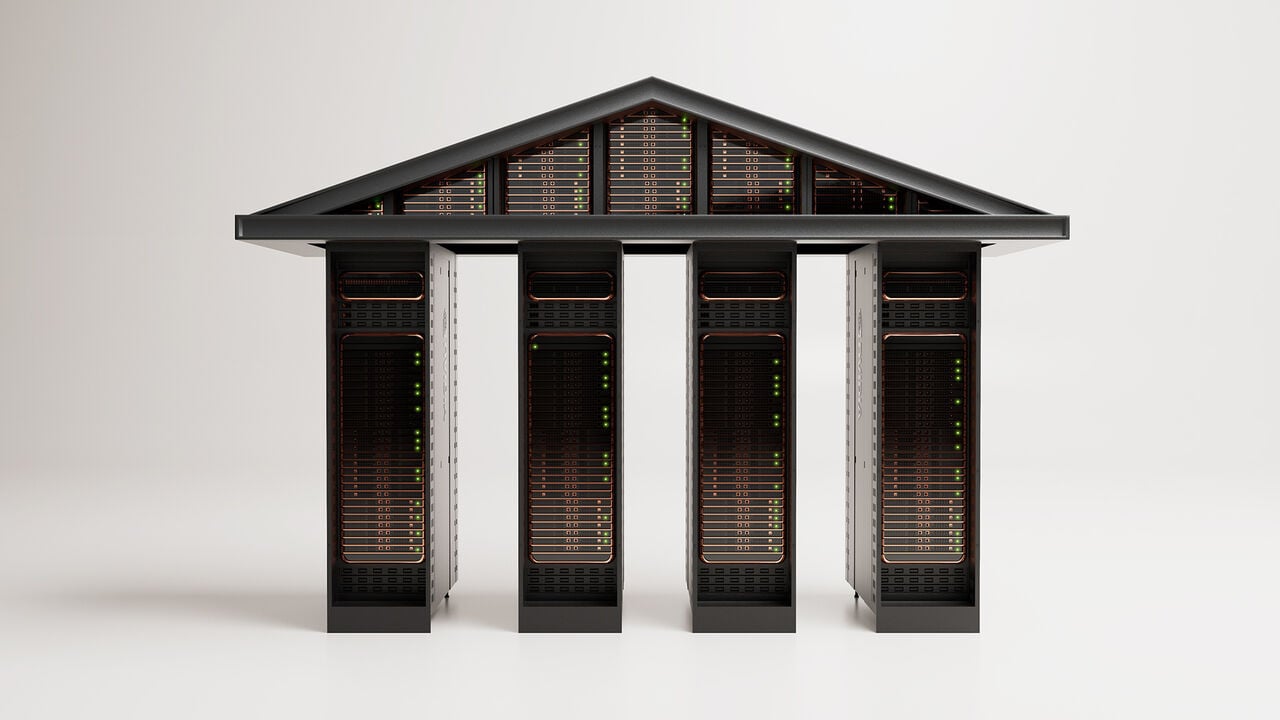
The Economist: Nvidia is "The Central Bank of AI"
The Economist published an interactive long-form piece comparing Nvidia to the central bank of the AI economy: Industry-wide capex follows its supply and price signals like following a central bank's balance sheet expansion; a single product release can reshape global data center investment rhythms. Latest closing price for Nvidia was $230.36, up 0.84%, bucking the trend on a day when tech weights generally pulled back (Microsoft -2.04%, Tesla -5.92%, Palantir -4.49%)—the pricing logic of a "quasi-sovereign asset" is being validated by market votes. This analogy highlights the pricing fact: Nvidia is no longer just a regular stock, but the "interest rate anchor" of the AI infrastructure cycle; downstream cloud vendors, model companies, and even sovereign funds base their investment decisions on its capacity and pricing. Correlations between "Nvidia shadow assets" like compute leasing, optical modules, and server OEMs will continue to rise; meanwhile, model manufacturers whose bargaining power is constrained by its pricing need to factor "central bank rate hikes" risk into gross margin expectations.
The "Bullwhip Effect" of AI Infrastructure: After GPUs Come Memory, After Memory Comes CPUs
Investor Tom Tunguz maps the transmission chain of the AI cost stack: The prevailing narrative is a neat relay race—first GPU scarcity, then memory bottlenecks throughput, followed by CPU tightness. But his judgment is that reality is a bullwhip effect: Shortage signals amplify level by level along the supply chain, with capex at each layer built on the expectation that "the next layer will be scarcer," rather than current real demand. The further down the whip, the larger the swing—when inference costs on the model side drop by orders of magnitude, over-investment in the infrastructure layer will eventually correct, and profit distribution across layers will shift from "who positions first" to "who withstands surplus." This week's divergence in US stocks reflects this transmission in real-time: Core compute assets closed green, while software and application ends concentrated pullbacks; capital is re-queuing along the cost chain. General server and storage companies at the end of the bullwhip have the most fragile long-term earnings expectations.
Market Snapshot: A-shares (Sept 4 close) saw the compute chain "hardware pausing, applications catching up"—Zhongji Innolight closed at 814.00 RMB (+0.12%), Eoptolink at 386.00 RMB (+0.32%), Foxconn Industrial Internet held ground at 63.69 RMB (+0.78%); Cambricon pulled back from highs -2.54% to close at 1072.00 RMB, Hygon Information -1.03%; Kingsoft Office led the application sector with +1.65%. US stocks (Friday, Sept 4 close) moved inversely—Nvidia +0.84%, Meta closed green at $616.77 (+1.00%); Alphabet -1.11%, Microsoft at $499.70 (-2.04%); Tesla led the Magnificent Seven lower with -5.92% closing at $354.08 (Cybercab regulatory controversy fermenting), Palantir -4.49% facing deepest pressure.
This draft is production material for Physix Frontier Alpha, for research reference only, and does not constitute any investment advice.
All information cites public sources; data is subject to official disclosures.
Physix Frontier · Alpha | Shenzhen Physix Frontier Technology Co., Ltd.
