 Physix Frontier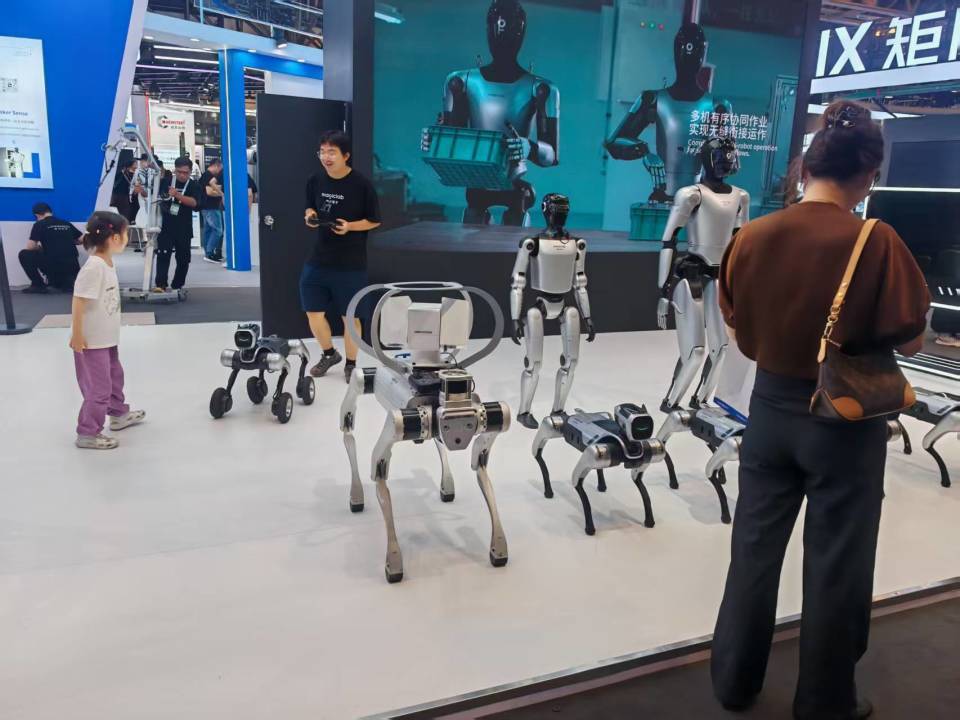
90% Success Rate in Box Stacking and Gluing: Embodied AI Moves from 'Seeing' to 'Doing'

The most valuable information in this article is that Magic Atom achieved over 90% success rate on long-horizon tasks like box folding and sealing glue using Magic-VLA K02—this isn't just numerical progress, but hints that embodied intelligence models may have crossed the practical threshold in two key dimensions: "task decomposition" and "closed-loop control."
As a first-year master's student who just joined the lab, I've recently been catching up on embodied intelligence papers. From RT-1 to RT-2, and now the VLA (Vision-Language-Action) paradigm, we've always discussed "how to teach robots long-sequence operations." But after reading this news, I realized a more realistic problem: What separates high success rates in the lab from robustness in real-world scenarios?
Why is Box Folding and Sealing Difficult?
Let's break down the task itself. Box folding and sealing looks simple but involves multiple sub-steps: grabbing flat cardboard boxes, folding them into shape, aligning edges, applying glue, pressing to cure. Each step requires precise visual feedback and force control adjustment. If precision deviates by more than 1-2 millimeters at any step, subsequent steps fail.
Traditional methods usually rely on hand-designed visual keypoint detection and trajectory planning, but success rates plummet when generalizing to different box specifications or lighting conditions. Magic-VLA K02 uses an end-to-end VLA model, directly inputting images and outputting action sequences, bypassing cumbersome intermediate representations—this is its biggest technical highlight.
While reading papers, I noted that the core challenge of VLA models is representing the "action space." If action granularity is too coarse, fine operations can't be completed; if too fine, the search space explodes. Did Magic-VLA K02 use some hierarchical action primitives? For example, defining "folding" as a high-level action that internally calls low-level controls? This might be a technical detail worth watching later.
What Does a 90% Success Rate Mean?
From a research perspective, 90% is a subtle boundary. If it were only 70%, it would suggest the model memorized patterns in specific scenarios with limited generalization; if it reached above 95%, it could almost be deployed on production lines. 90% sits exactly in the zone of "has practical potential but still needs optimization."
What interests me more is that they demonstrated not just box folding and sealing, but also flexible clothing organization and suitcase packing. These three tasks cover rigid objects, flexible objects, and cluttered scenes, three typical types. If the same model architecture can handle all three, it suggests Magic-VLA K02 isn't a specialized model but has taken a substantive step toward a general embodied brain.
However, I have questions: Were these tasks demonstrated in fixed scenarios? Would environmental changes (lighting, background, table surface material) cause success rates to crash? The news didn't mention generalization test data, which is a direction worth digging into in the future.
Technical Route from a Research Perspective
Comparing current mainstream VLA solutions: Google's RT-2 uses internet pre-training + robot fine-tuning, emphasizing "world knowledge" transfer; while many domestic teams focus more on real-time action closure, such as reducing inference latency via lightweight visual encoders. The naming of Magic-VLA K02 implies it might be an iterative version; K02 perhaps refers to the second-generation chip or model architecture.
I guess their technical route might have the following characteristics:
- Joint Vision-Language-Action Training: Learning not just actions, but also understanding language instructions and scene semantics
- Long-Horizon Task Decomposition: Possibly leveraging Large Language Model reasoning to break "box folding and sealing" into sub-task sequences
- Online Learning or Reinforcement Learning: The 90% success rate might come from massive training in simulation environments, then transferred to the real world
For beginners in research, this case is worth chewing over repeatedly. It tells us that the bottleneck of embodied intelligence has shifted from "can it do it" to "can it do it reliably." And behind "reliability" lie systematic engineering requirements for data quality, model robustness, and hardware consistency.
[!note] This image should be a demo screen from WAIC, showing the robot executing box folding. If you look closely at the end-effector posture of the robotic arm, you might infer their gripper design—this is a key hardware detail affecting grasping success rates.
Some Research Directions Worth Following
As a newcomer to the lab, I plan to track the follow-up progress of this work from the following aspects:
1. Data Collection Strategy: How much demonstration data did they use for box folding and sealing? Did it include failure samples? How diverse was the data?
2. Action Frequency and Latency: What is the inference latency of the VLA model? Is it fast enough for gluing operations requiring real-time force feedback?
3. Transfer to Other Tasks: Can common warehouse tasks like unboxing, grabbing, and palletizing be executed directly with the same weights?
The success of Magic-VLA K02 is essentially an engineering victory of fusing "perception-planning-control" into a single end-to-end model. But the real breakthrough may lie in proving that "low error rates for long-horizon tasks" no longer require explicit programming, but can be achieved through data-driven means. For starting researchers, this signal is more important than any technical detail—it tells us that the next phase of embodied intelligence will see the core competition shift from "algorithm innovation" to "systematic data engineering."
Original Link: https://www.qbitai.com/2026/07/454155.html