 Physix Frontier
Apollo Go Reaches Hong Kong, and Robotaxi Faces the Profitability Test Again
Apollo Go Reaches Hong Kong, and Robotaxi Faces the Profitability Test Again
This time Apollo Go is going to Hong Kong for public trial rides, not commercial operations. What is really worth watching about Robotaxi (driverless taxis) is the economics behind it: how much a single car can earn per day, what kind of computing power it runs on, and how far it still is from profitability.
Starting October 21, Apollo Go will launch two weeks of free trial rides in Tung Chung, Hong Kong, inviting more than 1,000 residents to participate. This is its first time opening trial rides to the public in Hong Kong.
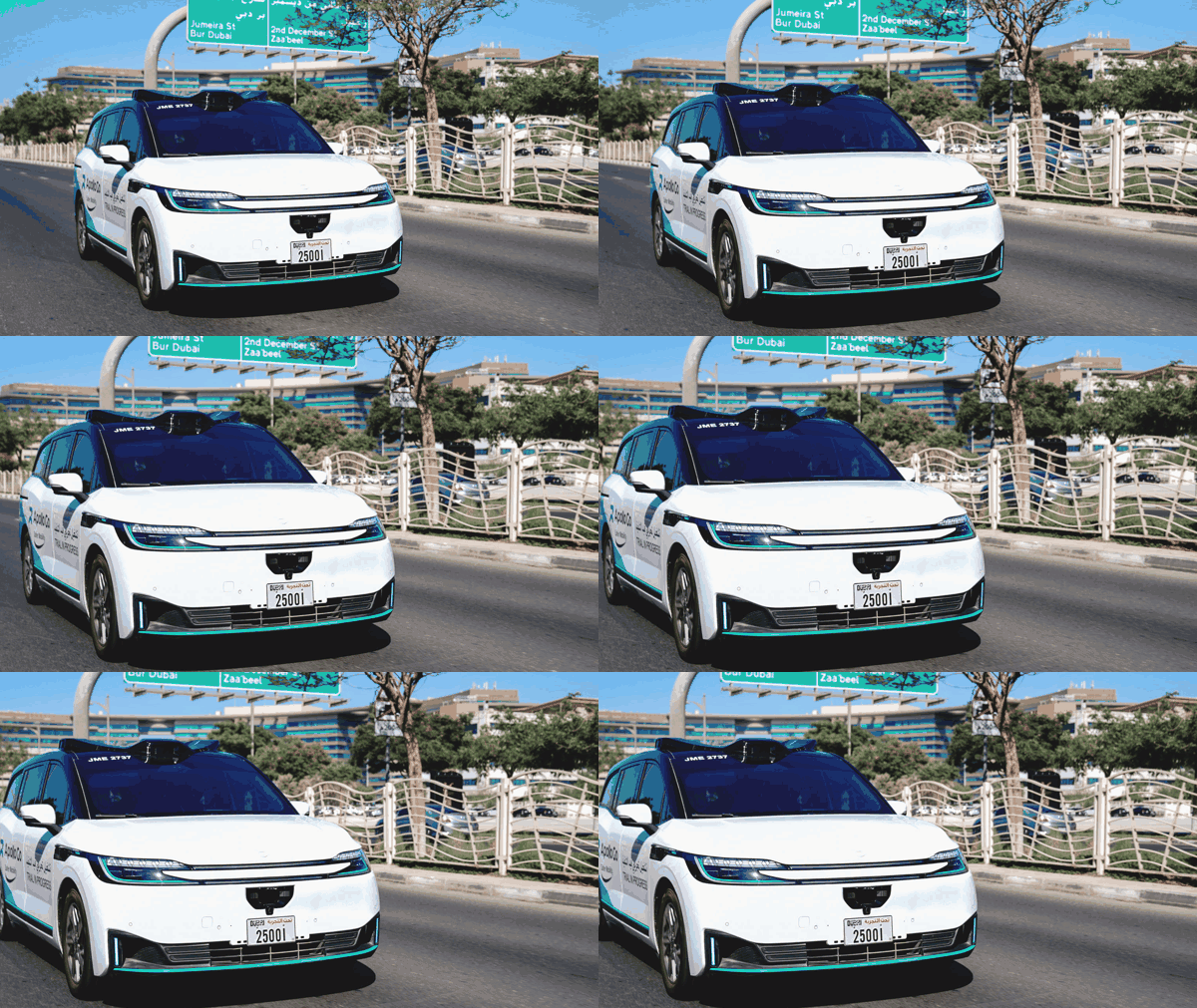
GIF: Apollo Go RT6 driverless vehicle operating in Dubai (Source: Baidu Apollo)
1. With the pilot license in hand, what level is this trial ride at?
Apollo Go is the first company to obtain Hong Kong's "pilot license", that is, the autonomous driving road test permit approved by the Transport Department. It obtained Hong Kong's first fully driverless test license in June, with the test area covering Airport Island and Tung Chung; as of October, it had safely driven more than 280,000 kilometers in Hong Kong (Source: Hong Kong Orange News).
Hong Kong is also the world's first market to conduct fully driverless testing under a "right-hand drive, drive-on-the-left" system. Traffic rules are opposite to those in the mainland, so maps and decision-making logic have to be redone. Starting first in an area like Tung Chung, where road conditions are simple and which is adjacent to the airport, is also an industry convention. Tung Chung is a testing ground, not the final destination.
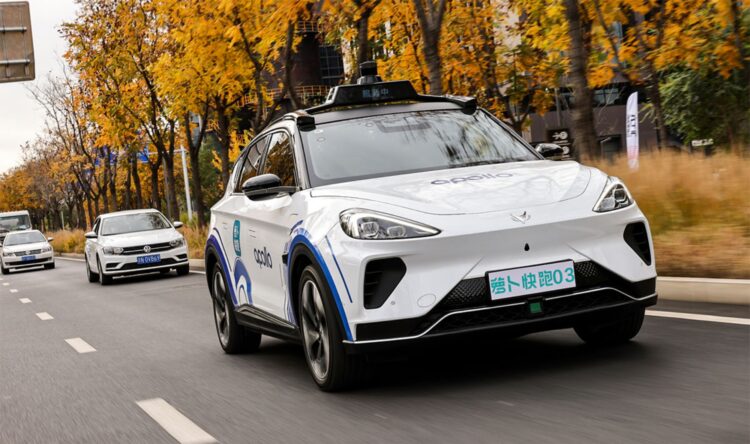
Image: Apollo Go O3 model during road testing (Source: Apollo Go)
2. How much can one driverless car earn in a day?
First, look at scale. According to Baidu's Q1 financial report, Apollo Go completed 3.2 million fully driverless trips, up more than 120% year over year; as of the end of June, cumulative services exceeded 23 million trips, covering 28 cities globally. Q2 needs to be looked at separately: orders fell back to about 1 million, under short-term pressure from operational adjustments in some cities, and management said they gradually recovered starting in August.
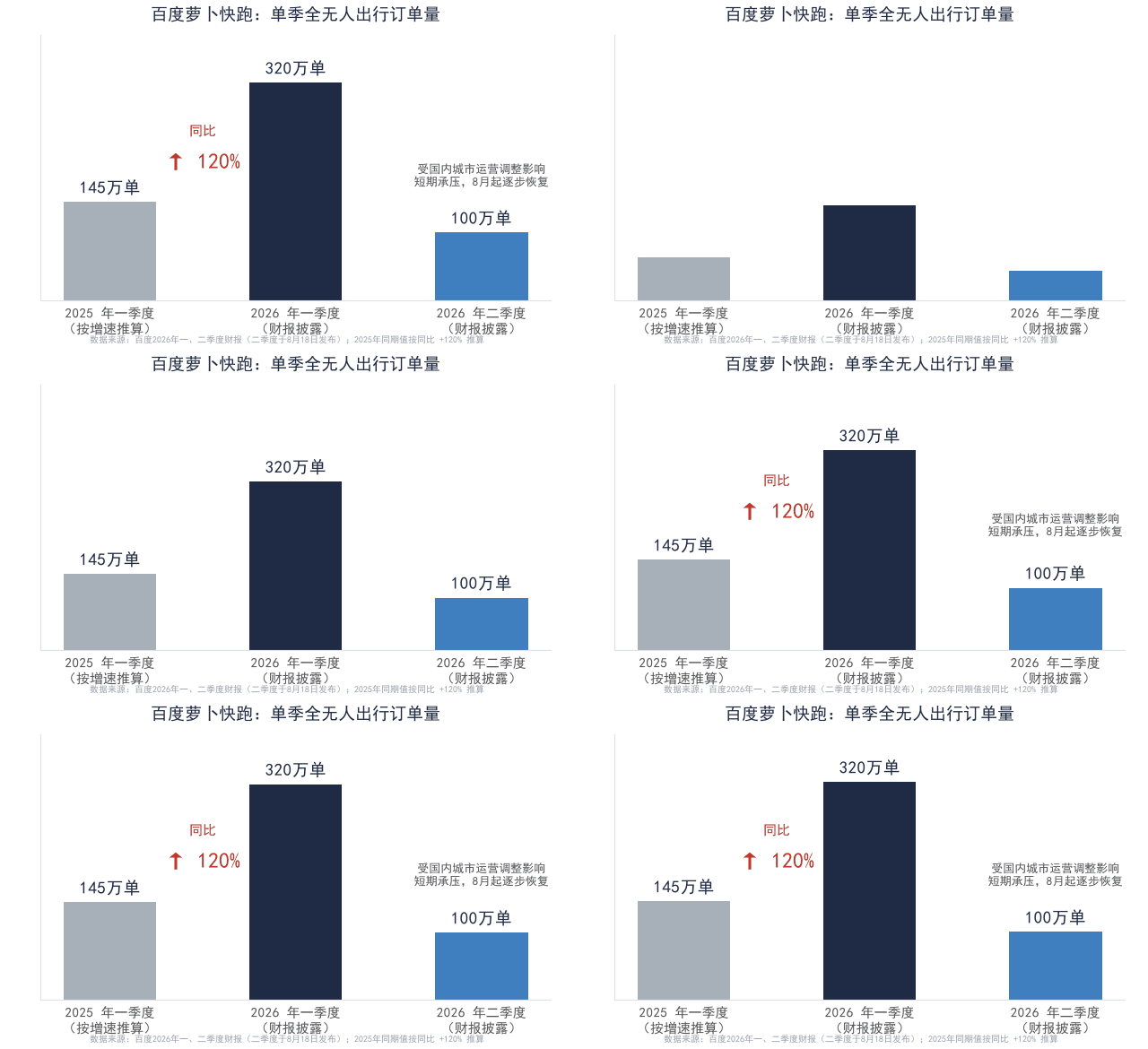
GIF: Apollo Go quarterly fully driverless order volume (Source: Baidu Q1 and Q2 financial reports)
Per-vehicle efficiency is more critical. Pony.ai's Q2 financial report provides the most complete per-vehicle economics so far: for the seventh-generation Robotaxi in Shenzhen's core operating area, average daily net revenue per vehicle was 338 yuan, with an average of 23 orders per day, reaching per-vehicle break-even after covering depreciation and operating expenses. Why does this math just break even? A vehicle costing about 230,000 yuan depreciated over 6 years comes to more than 100 yuan per day; charging, maintenance, insurance, remote safety operators, and ground staff add up to another more than 100 yuan per day, and the two together exactly consume the 338 yuan.
For comparison, monitoring by the Shenzhen Municipal Transport Bureau in the first half of the year showed that human ride-hailing vehicles citywide averaged about 13.6 orders per vehicle per day. The two are not measured on the same basis, with the former in a core high-density area and the latter citywide, so the gap may narrow slightly, but the efficiency advantage of driverless cars is still obvious.
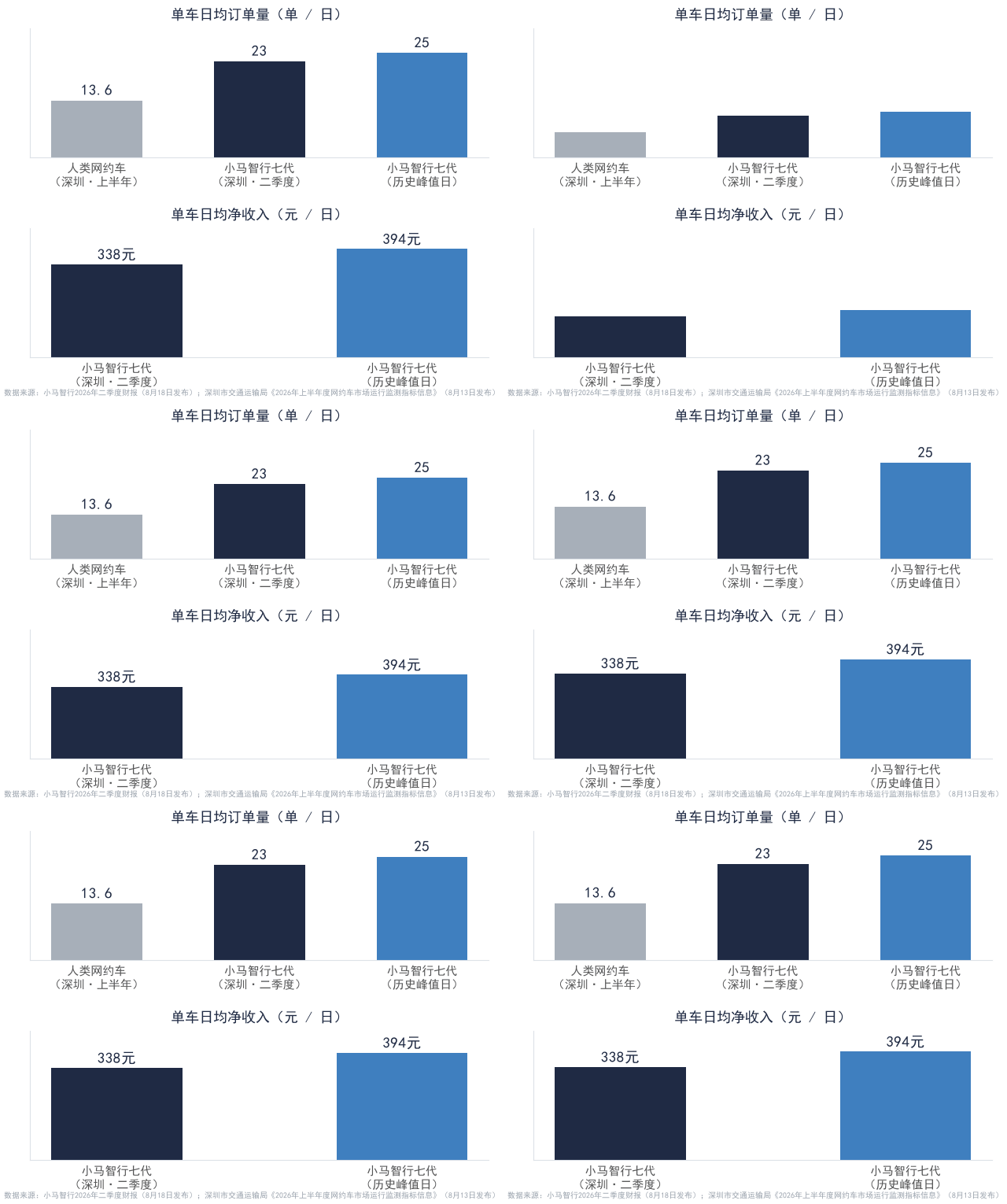
GIF: Comparison of per-vehicle efficiency in Shenzhen (Source: Pony.ai Q2 financial report; Shenzhen Municipal Transport Bureau first-half monitoring)
On Apollo Go's side, management confirmed at the Q2 earnings meeting that core operating cities such as Wuhan have achieved per-vehicle break-even. But note: Baidu did not separately disclose Apollo Go's revenue and profit, and per-vehicle economics do not mean this business is already profitable.
The scale math is even more stark: as of the end of June, Pony.ai's global fleet was 1,975 vehicles, and its CFO said cumulative deployment of 40,000 to 50,000 vehicles would be needed to have a chance of turning free cash flow positive, a gap of 20 times; in the same period, Waymo had about 3,800 vehicles and more than 500,000 paid orders per week. Per-vehicle break-even and company-wide profitability are two different things.
3. What does this car use for computing, and what level are the chips?
The computing platform of Apollo Go's sixth-generation driverless vehicle RT6 uses two Nvidia Orin-X chips. Baidu's stated figure is computing power of about 1,200 TOPS (combined across the two computing units), plus a Texas Instruments TDA4 for functional safety monitoring; on the perception side, it uses multi-sensor fusion of lidar plus cameras, with 38 sensors on the vehicle.