 Physix Frontier
Tesla's Car Can Fly Now, and Musk Talks About the Future of Smart Driving Again
The Roadster sells driving pleasure, while FSD sells the convenience of everyday driving. If Tesla wants to do well in both businesses, it needs to make supercar buyers willing to place orders and smart-driving users willing to keep paying. How much value they can bring to the company will depend on deliveries after the demo and how much profit the revenue ultimately leaves behind.
The new Roadster lifted off, flipped in the air, and then landed back on the ground at the launch event. Musk's statement from eight years ago about "making the car fly" now has a real vehicle demonstration. At the event, he also talked about the relationship between this supercar and Tesla's autonomous driving.
He said eight years ago that it would fly. What was achieved this time?
In June 2018, Musk talked on social platforms about how the SpaceX option package for the new Roadster would include about 10 small thrusters. In his vision, these thrusters could improve acceleration, top speed, braking, and cornering, and even make the car fly.
In February 2024, he gave an even more specific goal: accelerating from a standstill to 60 mph in under 1 second. The figure announced at this launch event was 0.81 seconds. The endpoint speed here is about 96.6 km/h, lower than the 100 km/h used in 0-100 km/h acceleration tests.
The event first showed a white Roadster driving up a curved ramp and traveling upside down, then demonstrated airborne flips and passing over a formation of cars. The idea from eight years ago finally had visuals that could be seen directly this time.
[Insert GIF here: Roadster airborne flip demonstration at the event]
The car can perform these maneuvers through the coordination of several devices. Suction devices make the car cling more tightly to the road surface, while cold-gas thrusters eject compressed gas to give the car extra thrust. The thrust direction can be changed, allowing the vehicle to perform maneuvers that would be difficult to achieve through tire grip alone.
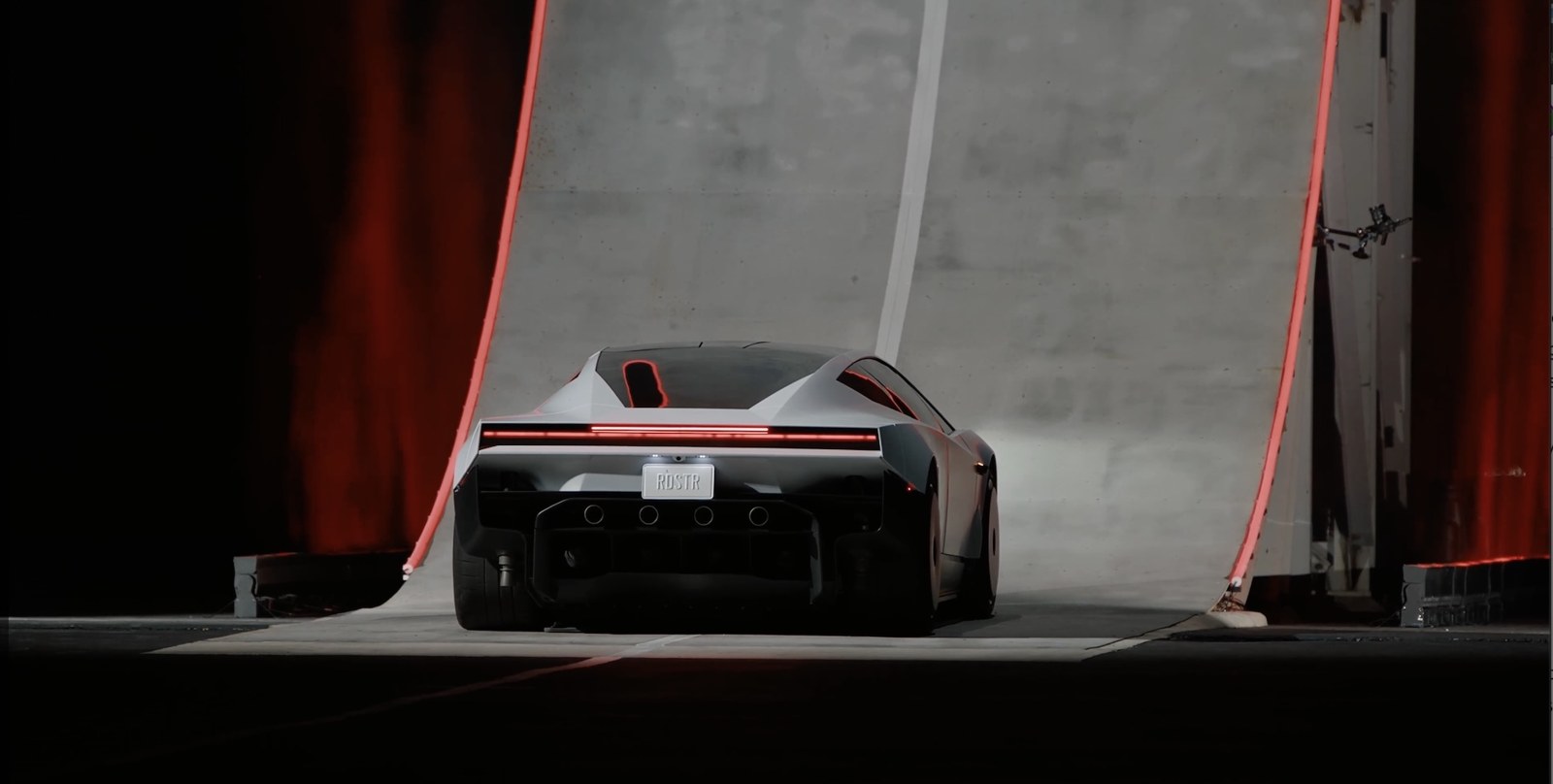
The new Roadster shown at this launch event. Image: Tesla / TechCrunch
The demonstration has been completed, but buyers still have to wait for mass production. Musk set the production target for 2028; the Rocket version with circumferential thrusters is also noted on the official website as not being allowed on public roads. The 0.81 seconds is still a result announced at the launch event, with no independent test results from a production car yet. Next, delivery timing and the final configurations that can actually be purchased will affect buyers' decisions more directly than the demo.
Tesla has been working on autonomous driving all along, so why still let people drive themselves?
At this launch event, Musk said the Roadster will ultimately become Tesla's only model that retains manual driving. He had already discussed this plan on the earnings call in April this year. In the future he envisions, other models move toward autonomous driving, while the Roadster is left for people who want to drive themselves.
These two needs are not hard to understand. During daily commuting, having fewer operational burdens for turning, changing lanes, and parking is a very concrete convenience. And the appeal of a supercar has always included the pleasure of controlling the vehicle by hand. By retaining this experience in the Roadster, Tesla can also use it to showcase its performance technology.
The FSD (Supervised) currently provided to owners is still assisted driving that requires driver supervision. A person must continuously pay attention to road conditions and be ready to take over the vehicle. Musk's statement about the "only model that retains manual driving" refers to future product planning.
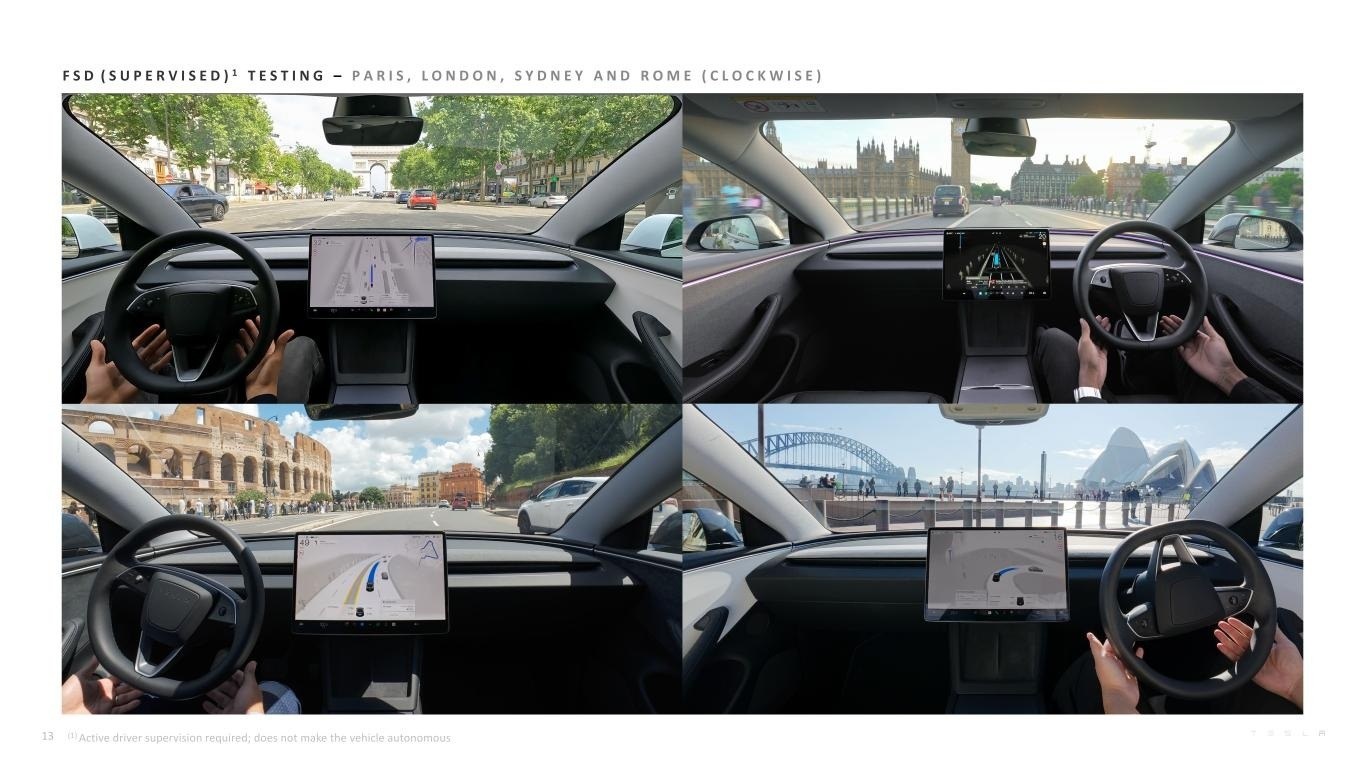
FSD (Supervised) road test footage disclosed in Q2 2025. File image: Tesla
If FSD is to make users willing to pay for it over the long term, it must remain consistently useful on everyday roads. Whether it follows cars smoothly in congestion and whether turning and parking are worry-free will all affect whether owners are willing to keep using it. What people remember about the Roadster can be a single demonstration, but the FSD experience has to stand up to day-after-day use.
The car can fly now. Does that make Tesla more valuable?
On the earnings call in April this year, when Musk talked about the Roadster, he said it may not significantly increase the company's revenue. This supercar can showcase performance, attract attention, and also meet the needs of high-end buyers. To drive Tesla's overall revenue growth, there still needs to be a larger-scale business.
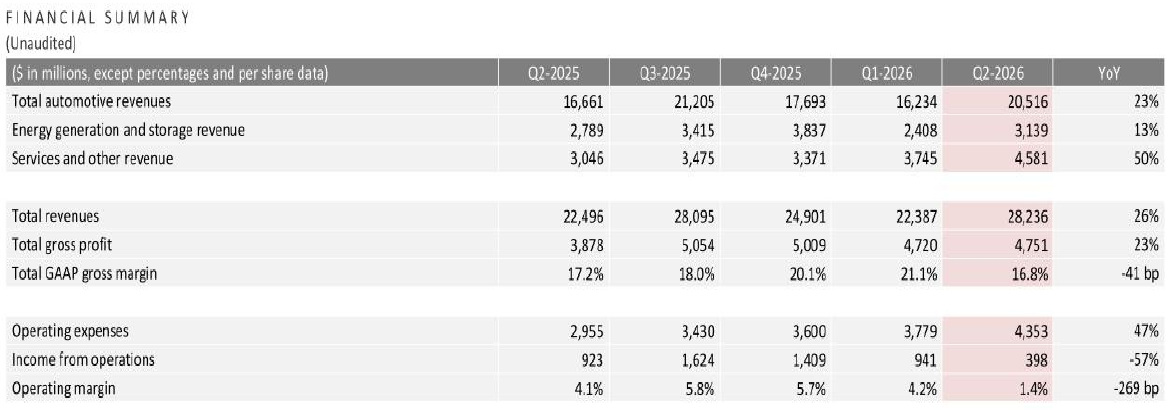
In Q2 2026, Tesla's total revenue was $28.236 billion, of which automotive business revenue was $20.516 billion, accounting for about 73%. The automotive business includes sales, regulatory credits, and leasing. Putting this set of figures beside it makes it easier to understand: for the Roadster to bring noticeable growth to the entire company, it would need a fairly large sales scale.
<