 Physix Frontier
1280 TOPS in the i6: Li Xiang's Chip Roadmap
1280 TOPS in the i6: Li Xiang's Chip Roadmap
The 2026 i6 is announced to carry the self-developed Mach M100, as Li Auto advances the long-term investment Li Xiang emphasized in interviews into a new model. From the L9 Livis to the i6, the self-developed chip is expanding its application scope. This update gives us a concrete product comparison: how the chip moat Li Xiang talked about moves from an R&D choice to a whole-vehicle application.
On October 9, Li Xinyang, head of Li Auto's product line, announced information about the new i6: assisted driving uses the Mach M100, with computing power of 1280 TOPS; the cockpit uses the Qualcomm Snapdragon 8797. Display cars entered stores on October 11, and the new car is scheduled for official launch on October 28.
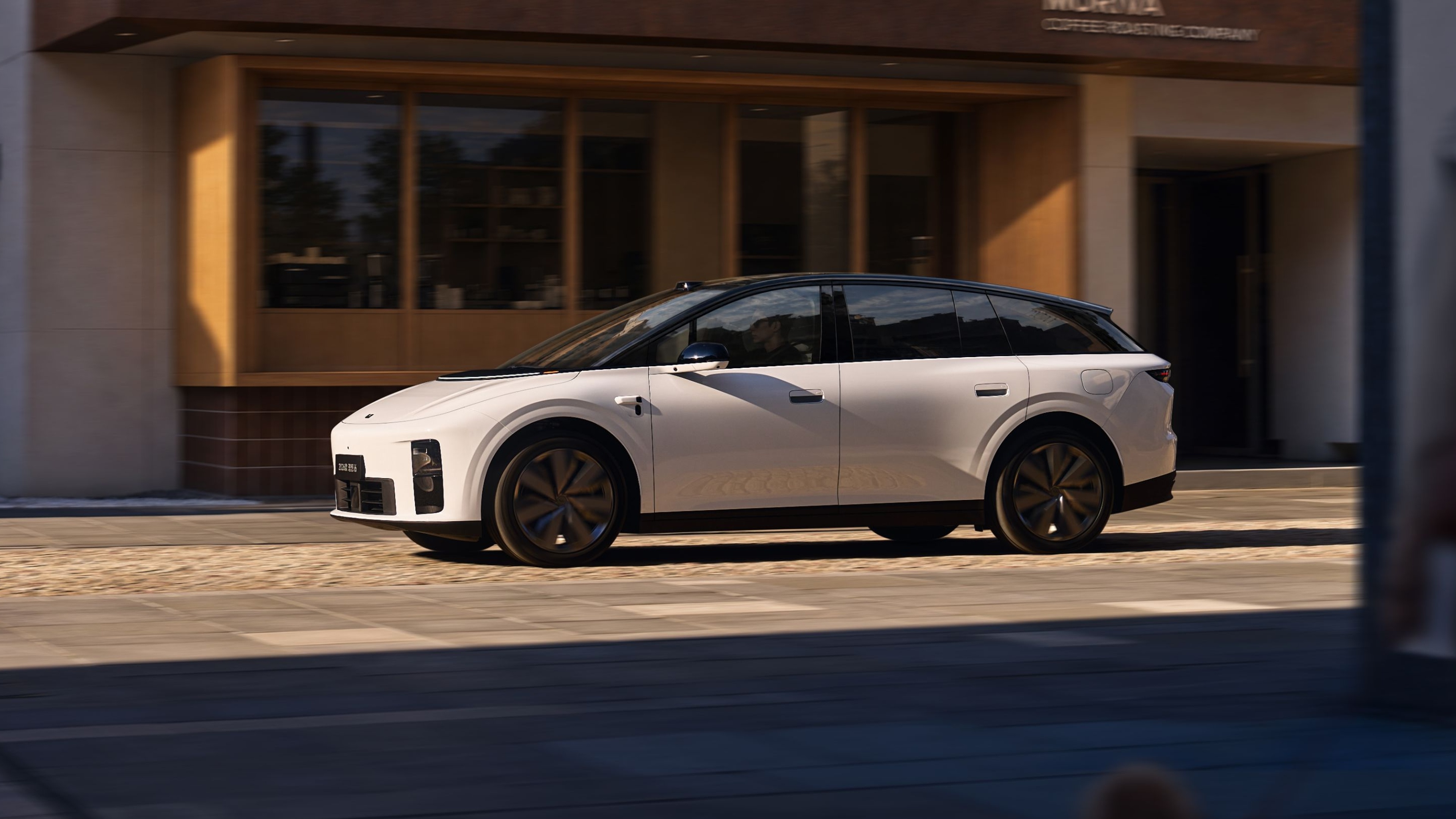
Official display image of the 2026 Li Auto i6
Putting this news together with the May 13 episode of Luo Yonghao's Crossroads gives the i6 chip change a longer timeline. In that interview, Li Xiang talked about the reasons for developing chips in-house, and also about what kind of company he hoped this investment would ultimately serve.
01 Why Treat Inference Chips as a Long-Term Moat
In the program, Li Xiang distinguished between product competitiveness and technical moats. Configuration innovation can improve the experience, but the flow of suppliers and talent can also spread innovation. He set his sights on the autonomous driving and robotics business of the next decade, and his answer was inference chips.
"What we can see as the ultimate moat is the inference chip."
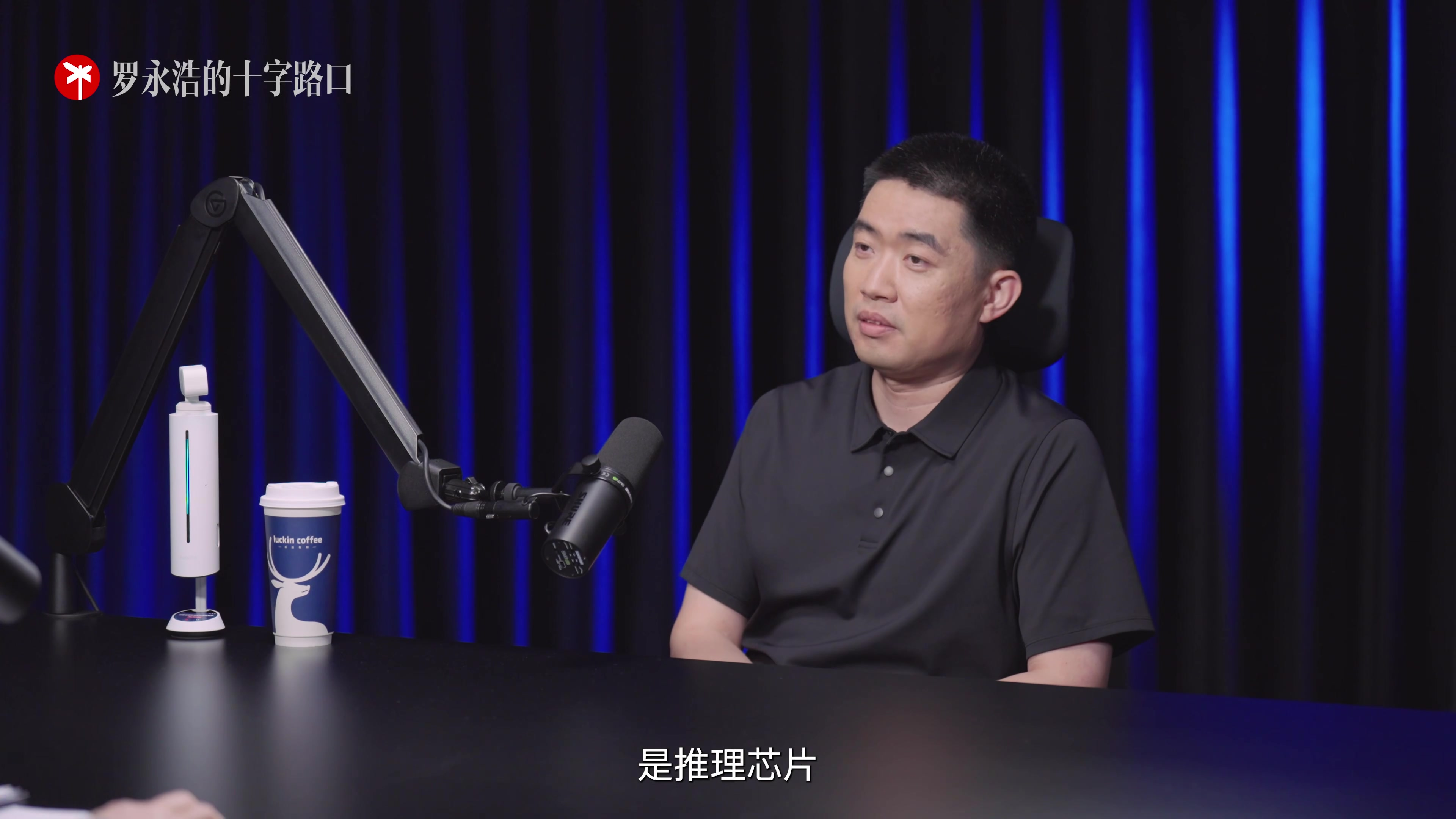
Screenshot from the original program: Li Xiang on inference chips and technical moats
Inference means running a trained model on actual tasks. For an intelligent driving system, the car must continuously read sensor information, judge the surrounding environment, and then output driving actions. The chip takes on the computing tasks of the model working in the car every day.
Li Xiang explained that Li Auto only gradually clarified its own needs after using multiple external chips. What the self-developed chip has to solve is how the model runs, how data is moved, and how the whole system improves efficiency. According to his R&D approach, the model, perception, operating system, and chip must be designed together.
This also increases the work the automaker must take on. After the chip is designed, software adaptation, toolchains, and whole-vehicle validation still have to be completed. Li Auto advances the chip together with software and whole-vehicle adaptation within the same R&D system, improving its control over the product iteration pace.
02 The i6 Connects the Self-Developed Chip to an Existing Model Roadmap
The i6's AI capabilities were already paved by the previous generation. Li Auto's Q3 2025 financial report stated that the i6 released in September 2025 already came standard with the self-developed VLA model and Li Xiang Tongxue agent. The model and agent entered the i6 before this chip change.
The new change in the 2026 i6 is that the Mach M100 entered the configuration list. Connecting the two generations shows Li Auto's investment order: first deploy the self-developed model in the model, then expand the self-developed computing hardware into it. The software roadmap and the chip roadmap gradually connect within the same vehicle line.
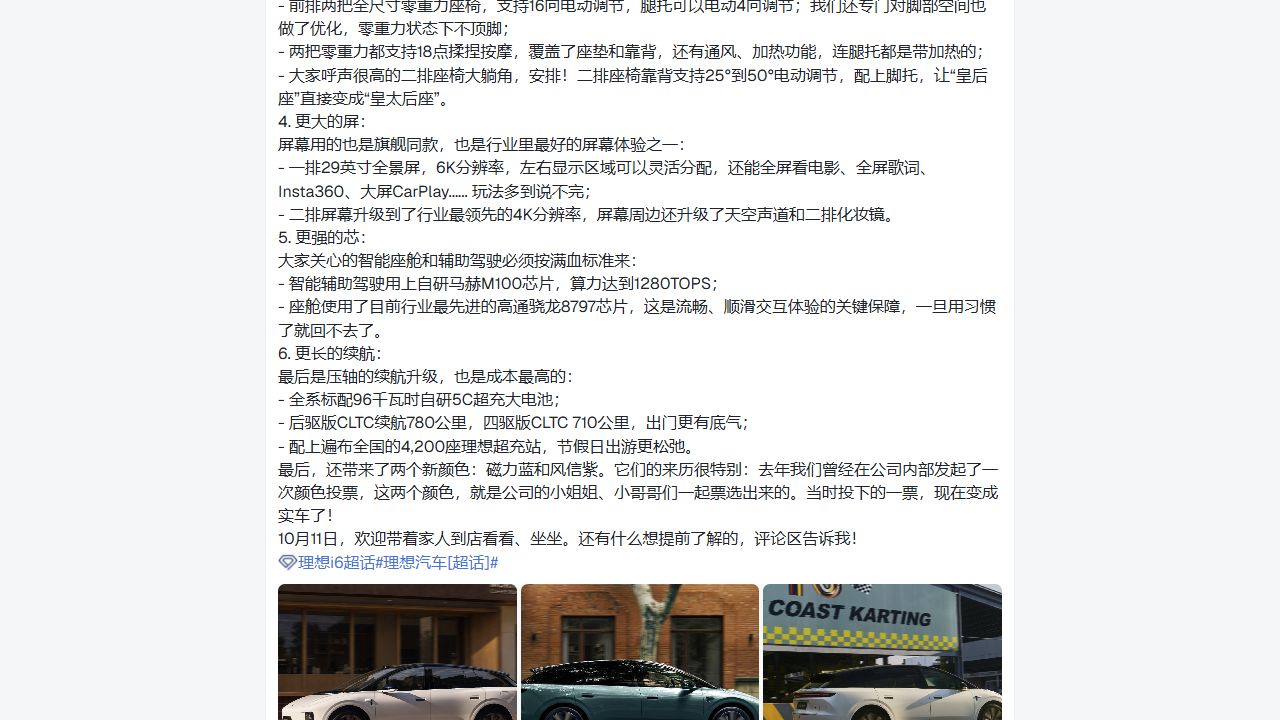
Li Xinyang's original October 9 post: explicitly announcing the M100 and 1280 TOPS configuration
When introducing the L9 Livis in the interview, Li Xiang said it had two M100 chips, totaling 2560 TOPS. The new i6 this time announced 1280 TOPS. The two cars use the same self-developed chip, with computing configurations laid out according to each product's arrangements.
Moving from a flagship debut to more models, the self-developed chip faces an increasing number of whole-vehicle tasks. Different models' sensor configurations, driving needs, and software upgrade rhythms all need to work with the computing platform. Expanding model coverage tests the self-developed system's ability to support multiple products.
Cross-model application also turns a technical choice into a business choice. As the number of products served by M100 increases, Li Auto must maintain this computing architecture long term and coordinate software adaptation across different models. Evaluating the return on self-developed investment requires calculating development, compatibility, and years of maintenance together.
03 What 1280 TOPS Ultimately Has to Become
In the program, Luo Yonghao pressed on what perceptible benefits the self-developed chip could bring. Li Xiang's answer focused on faster operating frame rates and larger model scale, and he used the example of the older L9 continuing to receive upgrades to explain why cars should be given reserved computing power.
This pulls the evaluation standard for the chip back to the product. Computing power numbers must correspond to model operating efficiency and continuous upgrade capability. What users encounter every day is how the vehicle understands road conditions, how it completes driving tasks, and what it can still get after several years of use.