 Physix Frontier
After Unitree's Stock Price Falls, What Should Investors Look at in Robotics IPOs?
After Unitree's Stock Price Falls, What Should Investors Look at in Robotics IPOs?
Original | Frontier of the Physical World · Industry Watch · September 28, 2026
From trading prices and financial quality to customer structure, distinguish between disclosed facts and unverified news.
On August 19, Unitree Technology (688836) listed on the STAR Market. Shanghai Stock Exchange data show that on its first day of trading, the intraday high was 1,100 yuan and the closing price was 845 yuan; by September 24, the closing price was 488 yuan. The stock price decline has led the market to revisit a question: what will ultimately justify the high valuations of robotics companies?
On September 21, Reuters cited anonymous sources saying that the listing process for some humanoid robot companies was under stricter scrutiny, with the focus including valuation and revenue quality. But the report also noted that different sources disagreed on whether there was a formal restriction, and the China Securities Regulatory Commission did not respond to a request for comment. Investment banking sources previously interviewed by Yicai believed that strictly controlling IPO quality is not aimed only at humanoid robots, nor can it simply be called a new industry ban.
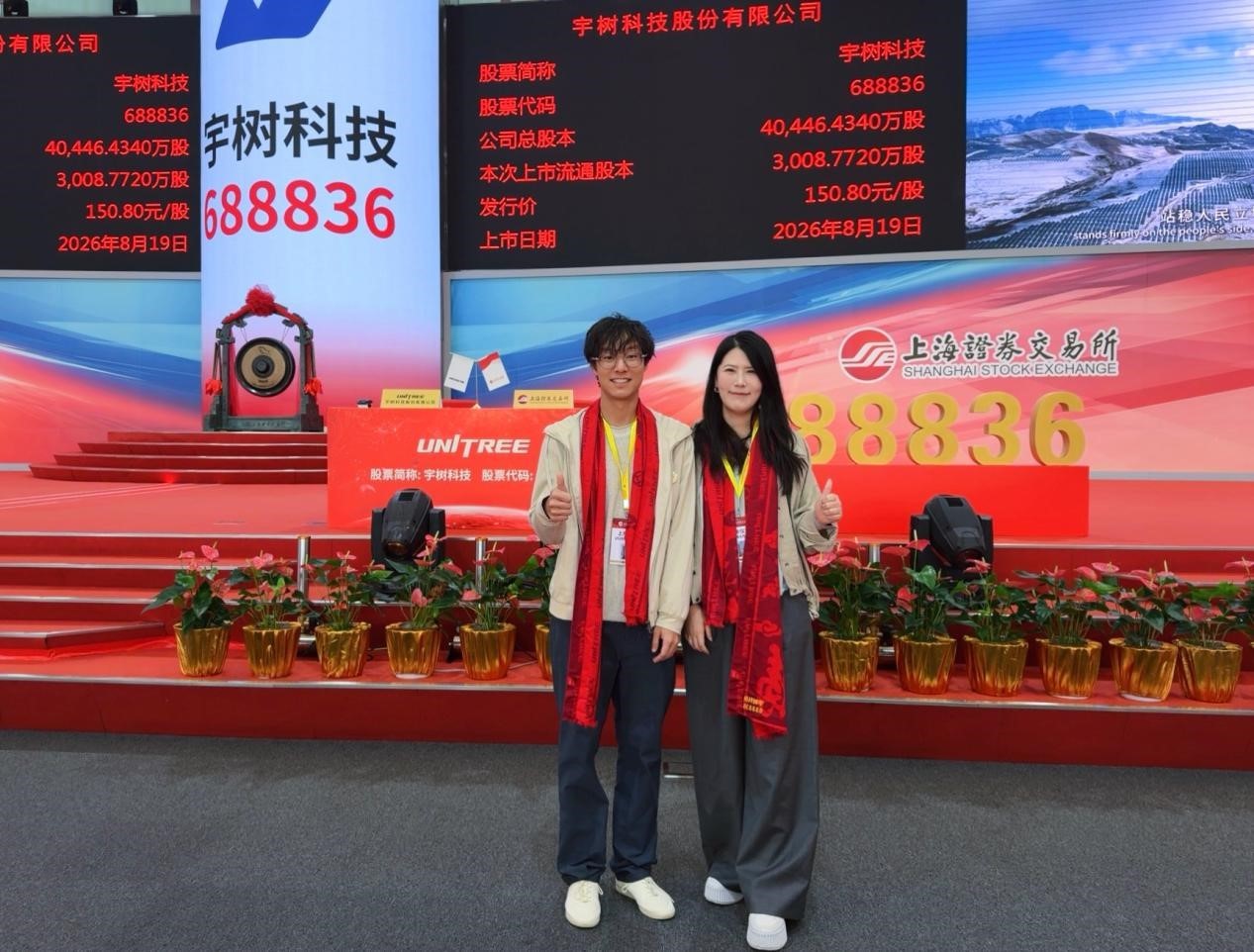
Figure 1: Unitree Technology's STAR Market listing on August 19, 2026. Image released by early investor Chuxin Capital. Image source
What Price Changes Can Explain
From the first-day closing price of 845 yuan to 488 yuan on September 24, the stock price fell about 42.2%; but 488 yuan is still above the issue price of 150.80 yuan. This set of numbers shows that market pricing has undergone a clear adjustment, but on its own it cannot prove that the company's operations have deteriorated, nor can it prove that the review standard has changed. In particular, the September 21 media report cannot be directly written as the cause of the stock price decline: the decline had already appeared before the report.
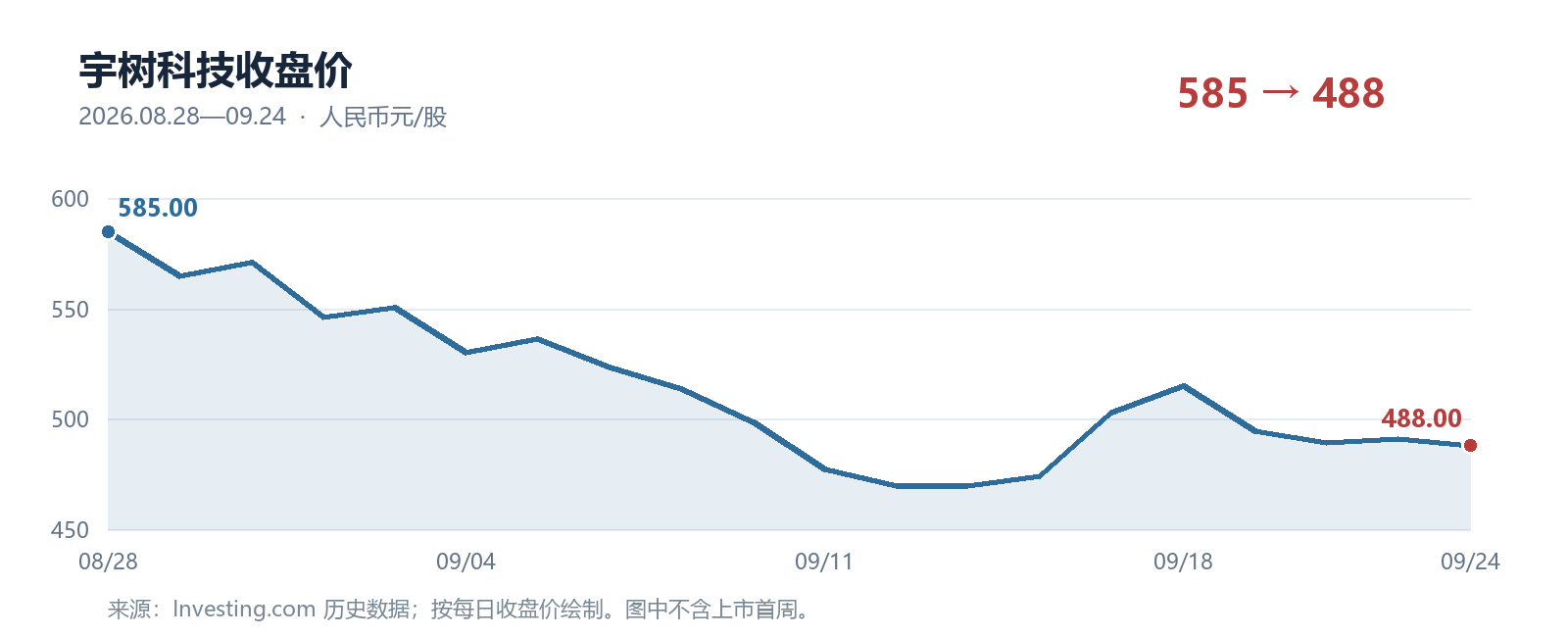
Figure 2: Unitree Technology's daily closing prices from August 28 to September 24, falling from 585 yuan to 488 yuan, a decline of about 16.6%. Drawn based on completed trading day data, excluding the first week of listing, and does not imply a causal relationship between media reports and stock price changes. Price data
Financial Reports: Look at Growth and Profit Together
The listing announcement disclosed that Unitree Technology's revenue in the first half of 2026 was 1.152 billion yuan, up 48.54% year on year; net profit attributable to shareholders after deducting non-recurring items was 244 million yuan, down 19.34% year on year; and net cash flow from operating activities was about 232 million yuan, down 32.53% year on year. This is a combination of "revenue growth, still profitable, but profit and cash growth not keeping up," and one cannot tell a story using only one of these indicators.
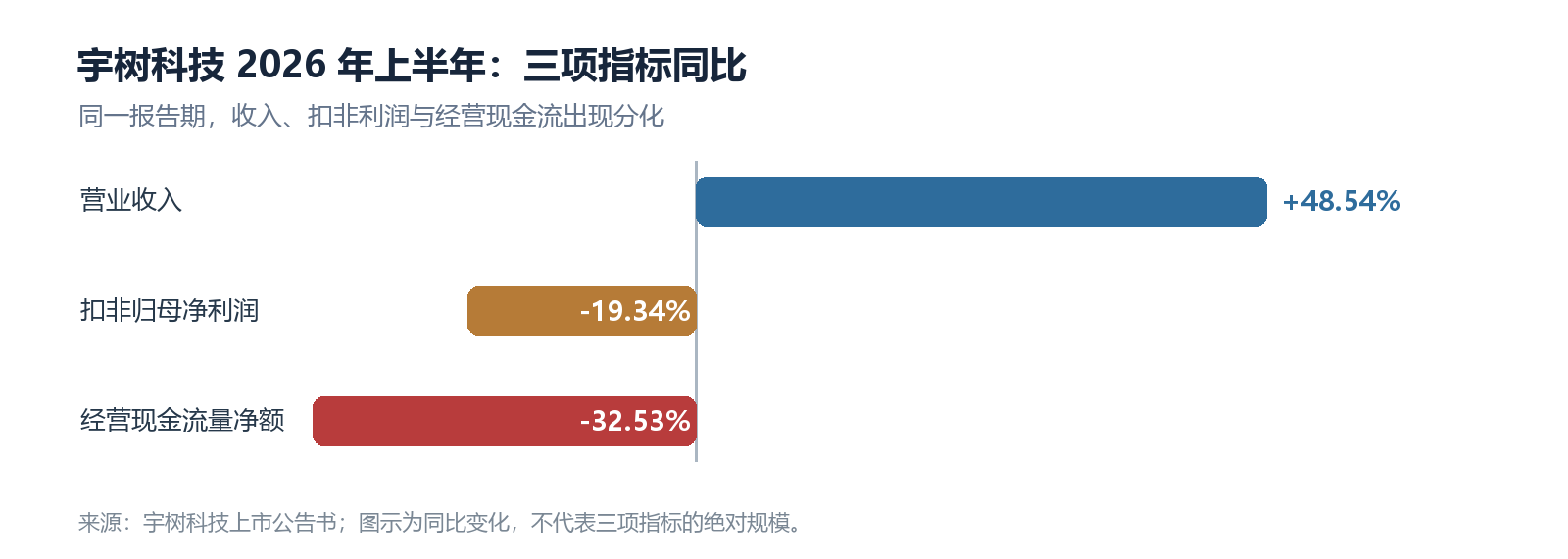
Figure 3: First-half revenue rose year on year, while deducted non-recurring profit and operating cash flow fell year on year. The three growth rates come from the listing announcement; the chart compares the direction of change, not the size of the amounts. Original announcement
The company explained that increased spending on R&D, sales, and other areas affected profit and cash flow. What investors need to verify next is: do these expenditures bring sustained orders? Can the gross margin of new products hold up? After revenue is recognized, how long until cash is collected? A one-quarter divergence is not enough to assert a trend; several consecutive reporting periods are more informative.
Customer Structure Determines How Far Growth Can Go
Unitree's early prospectus materials disclosed that in the first nine months of 2025, among humanoid robot revenue, research and education accounted for 73.6%, commercial consumption about 17.4%, and industry applications about 9.0%.
Research and education is a real sales scenario and should not be directly described as "no commercialization"; but this structure also reminds investors that at that time, large-scale paid applications in industrial positions were not yet the main body of humanoid robot revenue. This is data from a historical period and cannot be treated as the latest customer structure for 2026.
Experience in directly operated stores lets the public see the product, but transaction volume, customer repurchases, or factory deployments cannot be inferred from on-site photos.
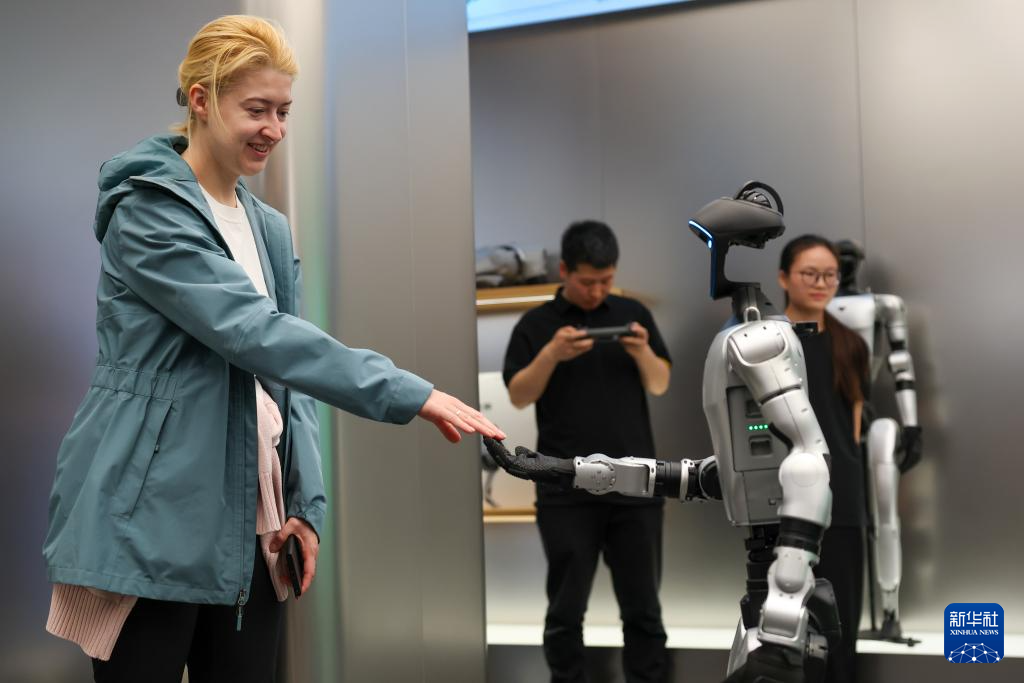
Figure 4: On April 30, 2026, visitors interact with G1 at a Beijing directly operated store. Photo by Xinhua reporter Ju Huanzong; the demonstration scenario does not represent sales. Original image
The Reuters report discussed the question of whether revenue from certain projects across the industry can be sustained, and did not prove that Unitree has