 Physix Frontier
Hesai's Sales Tripled, but Manufacturing Costs Fell 18.3%
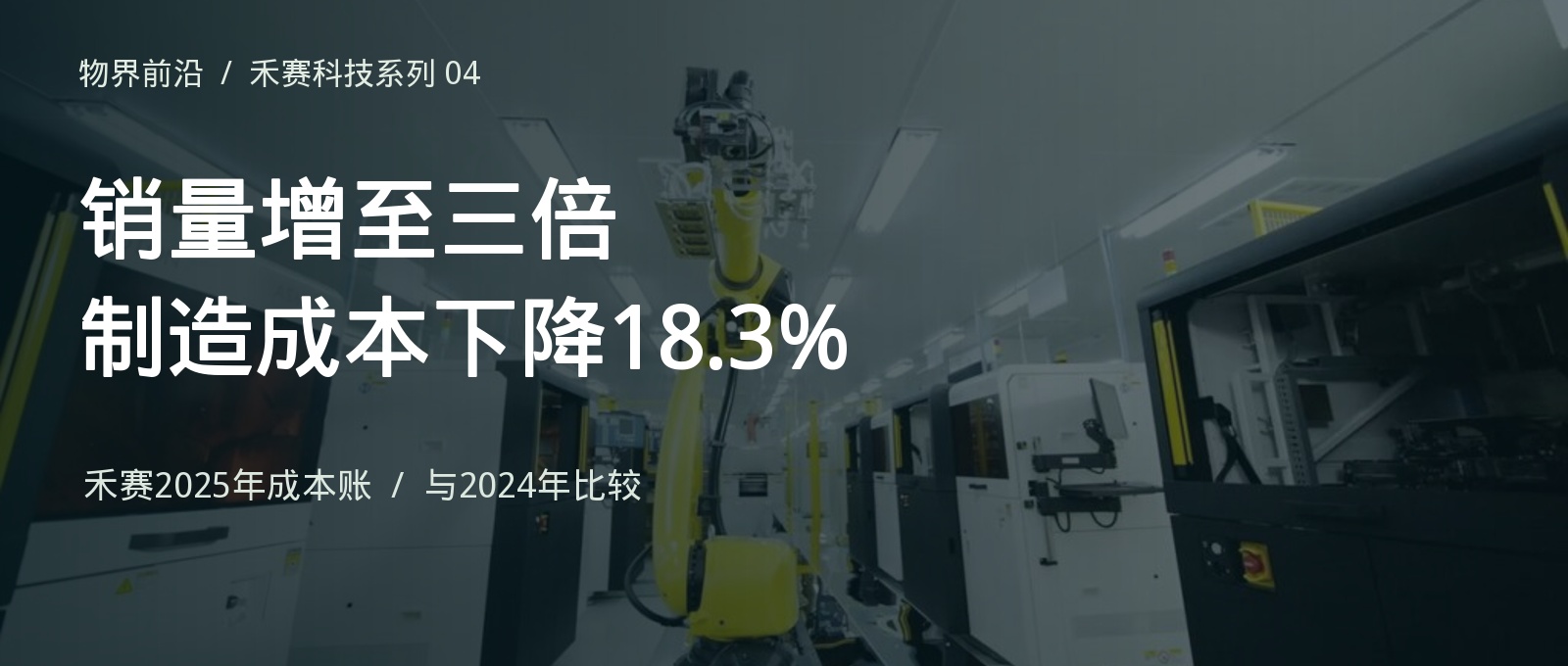
Automated production line from Hesai's official website announcement on January 5, 2026.
In 2025, Hesai's revenue-recognized lidar sales were about 1.62 million units, compared with about 500,000 units the previous year. Sales of lidar more than tripled, but manufacturing costs fell from 372 million yuan to 304 million yuan, a year-over-year decrease of 18.3%.
This saved money appears in the manufacturing cost line of the annual report, including depreciation of production equipment. Production labor is accounted for separately, and in 2025 it actually more than doubled. Only by breaking down the cost table can one clearly see what Hesai has already saved, and what types of problems its in-house chips and automated production lines are solving.
First, look at where costs actually fell
The 2025 annual report breaks operating costs into materials and components, manufacturing costs, production labor, and other costs. How labor, depreciation, and components each changed relates to how much additional expense the factory must incur after selling another batch of lidar.
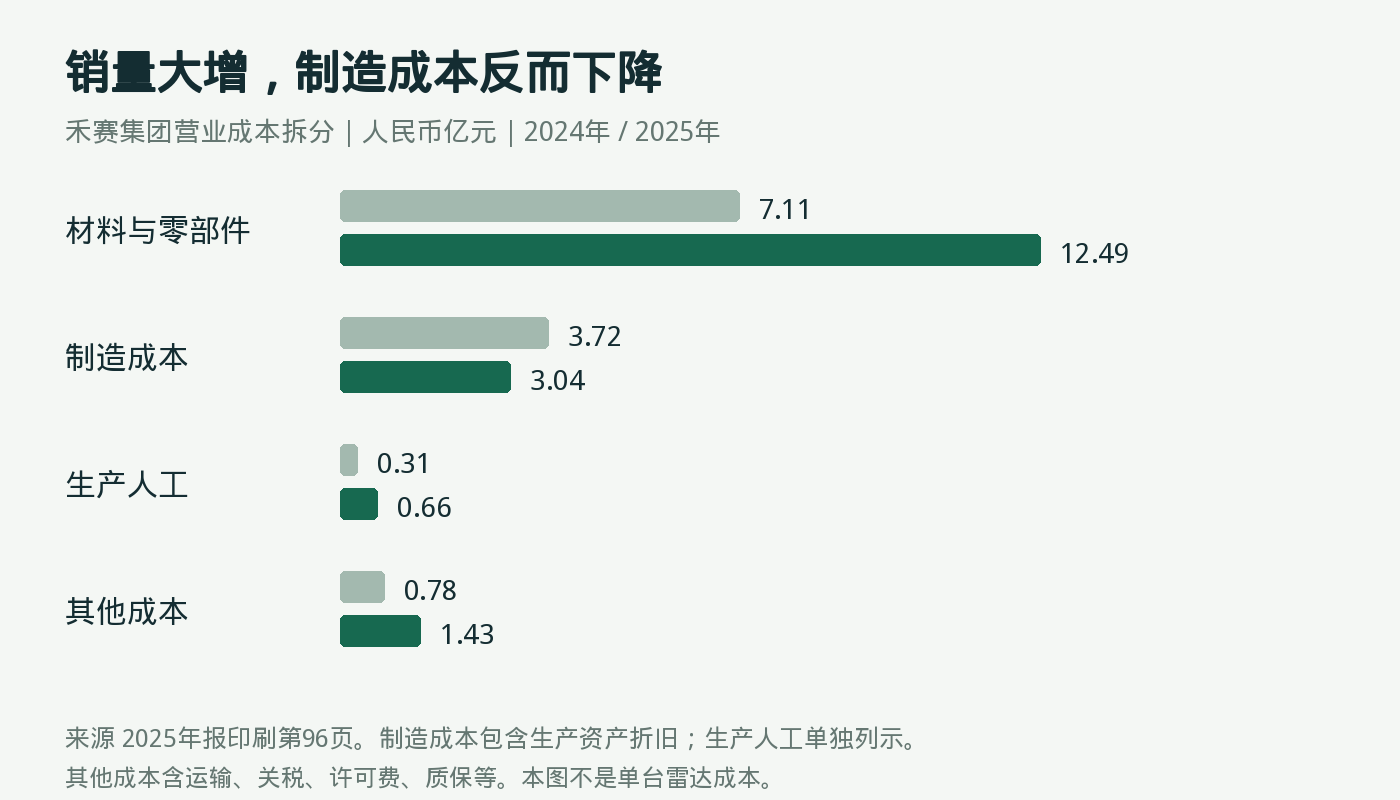
Figure 1 is drawn according to amounts disclosed in the annual report. Units are in hundred million yuan; gray is 2024, green is 2025.
Manufacturing costs fell 18.3% year over year, while production labor rose from 31.15 million yuan to 66.37 million yuan, an increase of 113.0%. The two combined fell from 403 million yuan to 370 million yuan, a decrease of about 8.2%. Their share of total operating costs also fell from 33.8% to 21.0%.
The annual report attributes the decline in manufacturing costs to cost and scale optimization of ADAS and robotics lidar. ADAS refers to a car's advanced driver assistance system. When sales rose sharply, manufacturing costs still fell, which is financial evidence of efficiency improvement brought by scale expansion. How much automation, processes, and product changes each contributed was not broken out in the annual report.
Materials and components costs rose from 711 million yuan to 1.249 billion yuan. This is the amount included in operating costs for the period, recognized as products are sold, and is not the same as procurement payments for the year. The company sold more products and its model mix also changed, so the annual change in material costs is still not enough to calculate how much was saved per unit for the same lidar model.
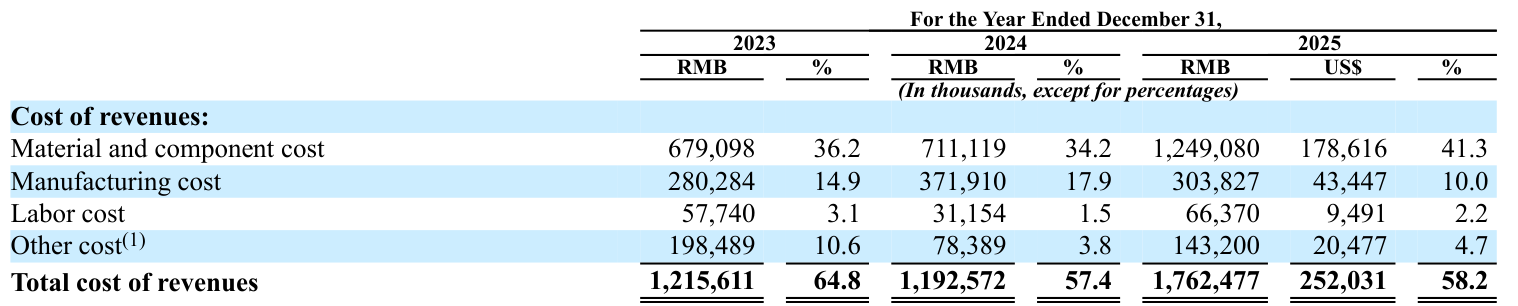
Partial original table from page 96 of the printed Hesai 2025 annual report. Amounts are in RMB thousands; percentages in the table use revenue as the denominator, while the 33.8% and 21.0% in the text use operating costs as the denominator.
In-house chips save effort from the design stage
Hesai's April 20 technical explanation disclosed that the Fermi C500 integrates a microcontroller, programmable logic functions, and analog-to-digital conversion into the same controller chip, corresponding respectively to MCU, FPGA functions, and ADC. Simply put, control tasks, digital logic operations, and converting analog signals into digital can be completed on the same chip.
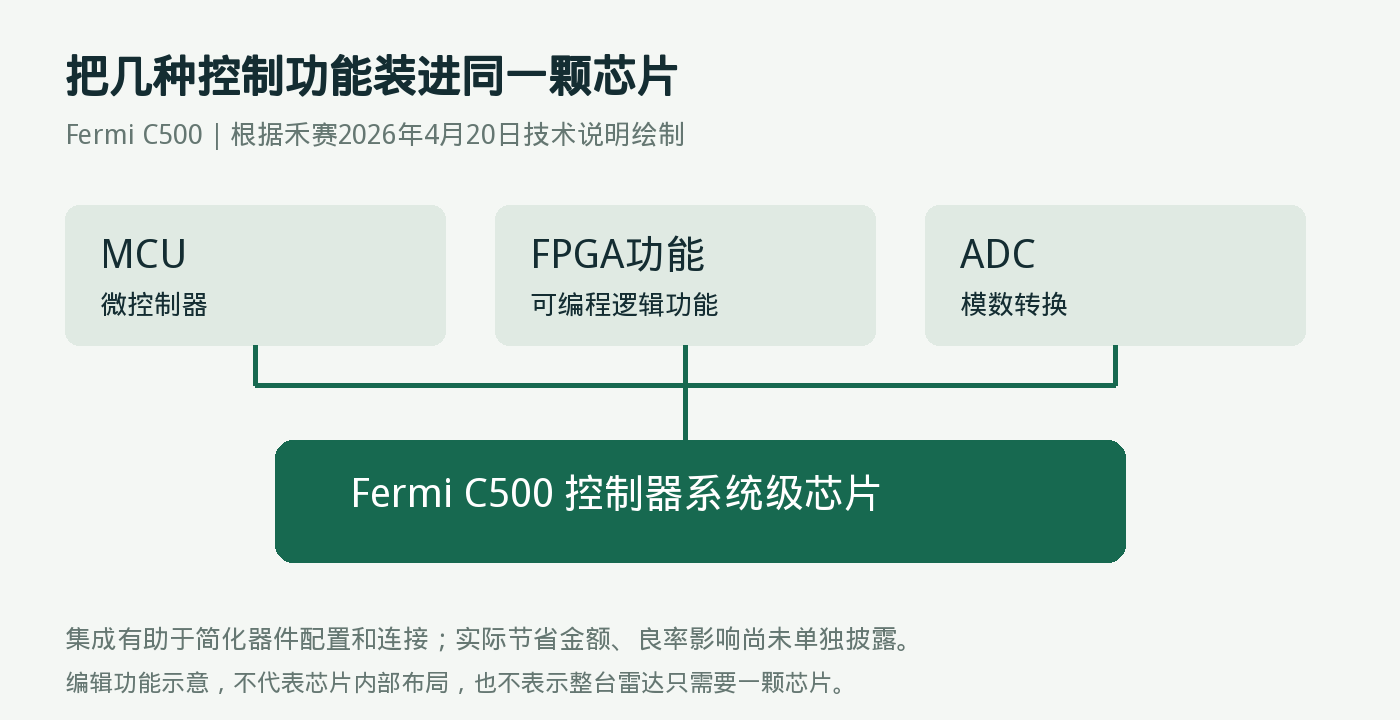
Figure 2 is an editorial functional illustration based on Hesai's official website explanation on April 20. Integrated functions do not mean the entire lidar needs only one chip.
From a design perspective, integrating related functions more compactly helps reduce connections between discrete components and can also simplify assembly and testing. This explains how specialized chips improve production. Hesai did not map the C500's application timing and savings amounts item by item to 2025 manufacturing costs, so last year's cost reduction cannot be directly attributed to this chip.
In-house development itself also costs money. In 2025, Hesai's R&D expenses were about 797 million yuan, covering the company's R&D activities and not all of which can be counted as chip spending. How much was spent on chip R&D and how much is saved per unit after mass production still require separate disclosure in order to calculate the return on investment.
Ten seconds refers to the off-line interval
Hesai's main mass production base is in Hangzhou. The 2025 annual report states that Phase II of the Hertz Center began operations in August of that year; the Shanghai Maxwell Center mainly handles R&D, design, testing and calibration, and limited manufacturing.
The annual report discloses that automated equipment places laser transmitters and receivers onto circuit boards with micron-level precision. After assembly, the lidar undergoes automated testing to check ranging capability, accuracy, and reflectivity measurement performance.
The lidar must first align its optical components, and then confirm that the measured distance is reliable. Automation serves both assembly precision and production efficiency. The company says core production processes have achieved 100% automation; production labor costs are still increasing, and the two disclosures are not contradictory. Automation refers to core processes, while labor costs cover a broader scope.
On January 5 this year, Hesai also announced an average off-line interval of 10 seconds. A production line can process products at different stages simultaneously, so one unit coming off the line every 10 seconds does not mean each unit takes only 10 seconds from assembly to testing. The announcement did not provide the manufacturing time for the entire product, downtime, or line changeover time.
The money saved still has to race against selling prices
In the same January announcement, Hesai announced plans to expand annual production capacity from 2 million units in 2026 to more than 4 million units. Once equipment is purchased, orders must keep up. The annual report clearly states that when new lines and new products are ramping up, capacity utilization is usually insufficient; only when a production line has enough products to work on does scale expansion help dilute expenses.
Four million units is planned annual production capacity. The company has not disclosed sufficiently detailed data on when specific production lines will open or how much will actually be produced. At present, it is still not possible to calculate utilization after expansion, nor to judge how much depreciation per unit the new equipment spreads across.
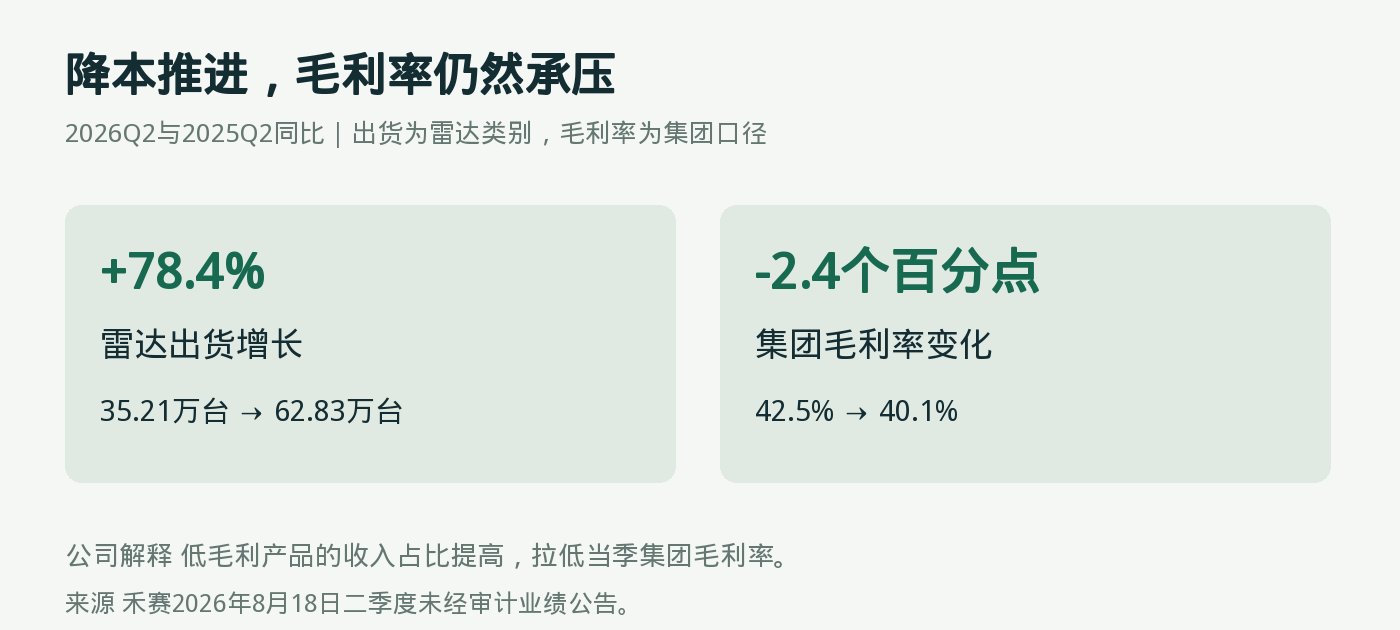
Figure 4 is a year-over-year comparison based on the August 18 announcement. Group gross margin includes the company's other businesses and cannot be entirely attributed to lidar manufacturing.
Second-quarter 2026 results disclosed on August 18