 Physix Frontier
After Hesai's Sales Doubled, Who Is Driving the Growth?
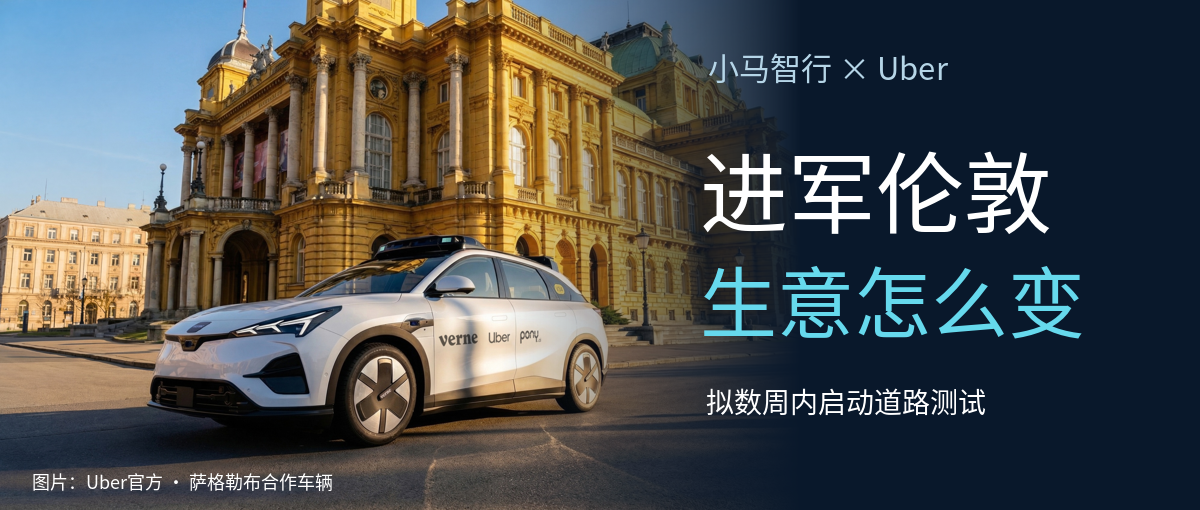
On October 8, Pony.ai and Uber announced that they are moving forward with plans to bring the seventh-generation Robotaxi to London, with road testing expected to begin in the coming weeks. A Robotaxi is a taxi in which an autonomous driving system handles the driving task. The news pushes the two companies' European expansion one step forward, but the number of initial vehicles in London, the timing of paid operations, and the specific revenue-sharing terms have not yet been announced.
Before the London testing begins, Pony.ai's revenue has already changed. In the latest disclosed second quarter of 2026, Pony.ai's Robotaxi business revenue was $12.073 million, up 691.2% year over year. This revenue category includes both revenue from passenger fares and contributions from deploying vehicles in co-built fleets, so it cannot all be viewed as ride-hailing revenue. Expanding the fleet to more cities is also expanding two different kinds of business.

IT Home, October 8, 2026. The London announcement was about plans to begin road testing, and no paid operation timeline has been given.
Sell the car first, then share the fare
In an interview published on the company's official website, Pony.ai co-founder and CFO Wang Haojun explained the financial arrangement of co-built fleets very directly. Vehicle assets are usually held by mobility platforms or local operating companies, and these partners bear the capital expenditure for purchasing vehicles. Pony.ai can first sell vehicles to one of these parties, and then take a share of the transaction value from the mobility service.
The first revenue stream is related to vehicle delivery, and the second is related to the vehicle's subsequent passenger-carrying operations. When the owner buys the car, during operation it is essentially hiring Pony.ai's autonomous driving system to drive; when the car picks up passengers and generates fares, Pony.ai can share in the revenue according to the agreed terms. Wang Haojun called Zagreb the first experiment with this approach.
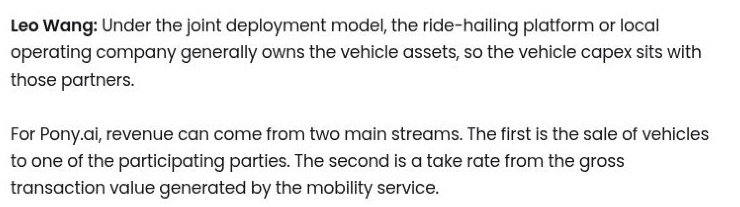
Pony.ai official website, interview dated September 17, 2026. Wang Haojun explained that partners usually hold the vehicles and bear the capital expenditure for purchasing them, and Pony.ai can generate revenue through vehicle sales and a share of fare transaction value.
This also explains why the Uber partnership is worth watching. The first European project is in Zagreb, Croatia, where Verne holds and operates the vehicles, Pony.ai provides the autonomous driving technology, and Uber provides the ride-hailing entry point. Local passengers can match with these vehicles through UberX or Comfort, giving Pony.ai an opportunity to obtain continuous paid trips through an existing platform.
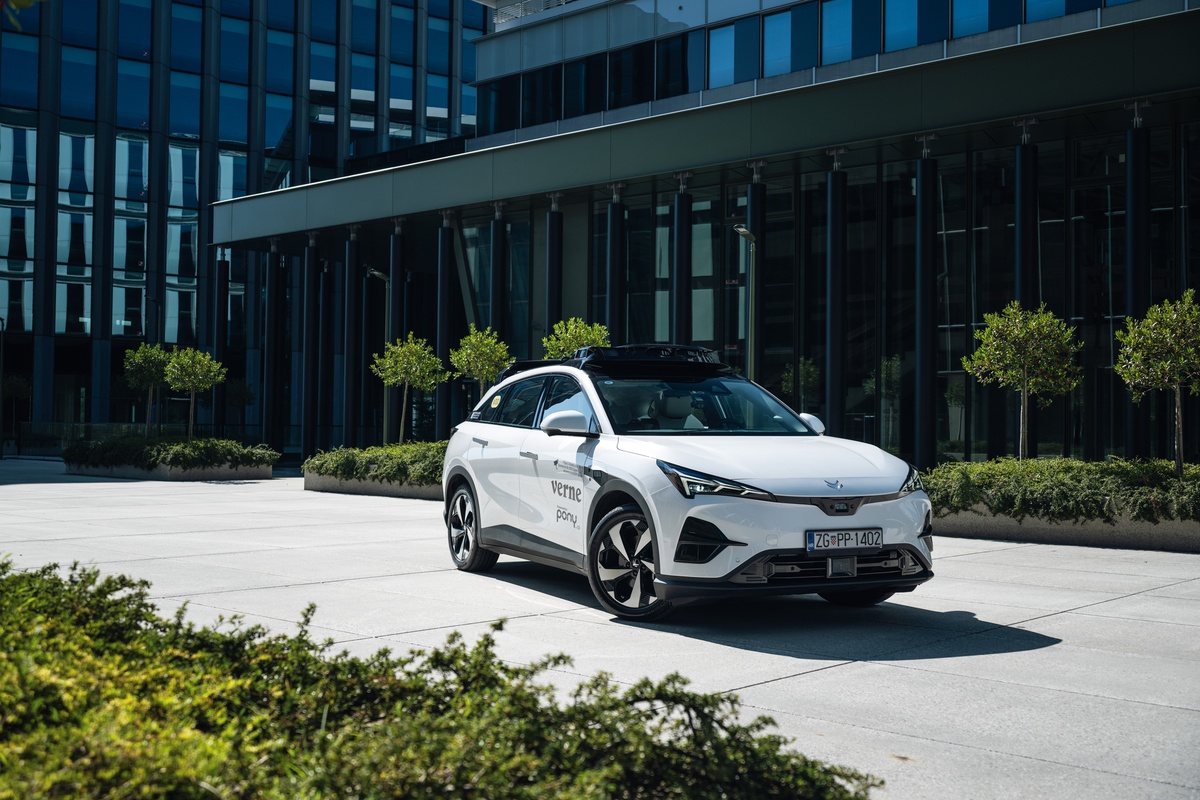
Image accompanying Pony.ai's September 10, 2026 announcement. The seventh-generation Robotaxi used in Zagreb has both Verne and Pony.ai markings on the body; the photo is not from the London test site.
London has not yet disclosed the full commercial arrangement, so the vehicle owner and terms from Zagreb cannot be directly applied to it. But the company has already made clear how the co-built model generates money. Once the London contract details are disclosed, what needs to be examined is who buys the vehicles, when the vehicles are delivered, and how much of the fare Pony.ai can share.
Both vehicle sales and fares go into this revenue
In the second quarter, the company's total revenue was $36.22 million, with Robotaxi accounting for about 33.3%; in the same period last year, that share was only about 7.1%. It has gone from a relatively small revenue source to an important business supporting the company's revenue growth.
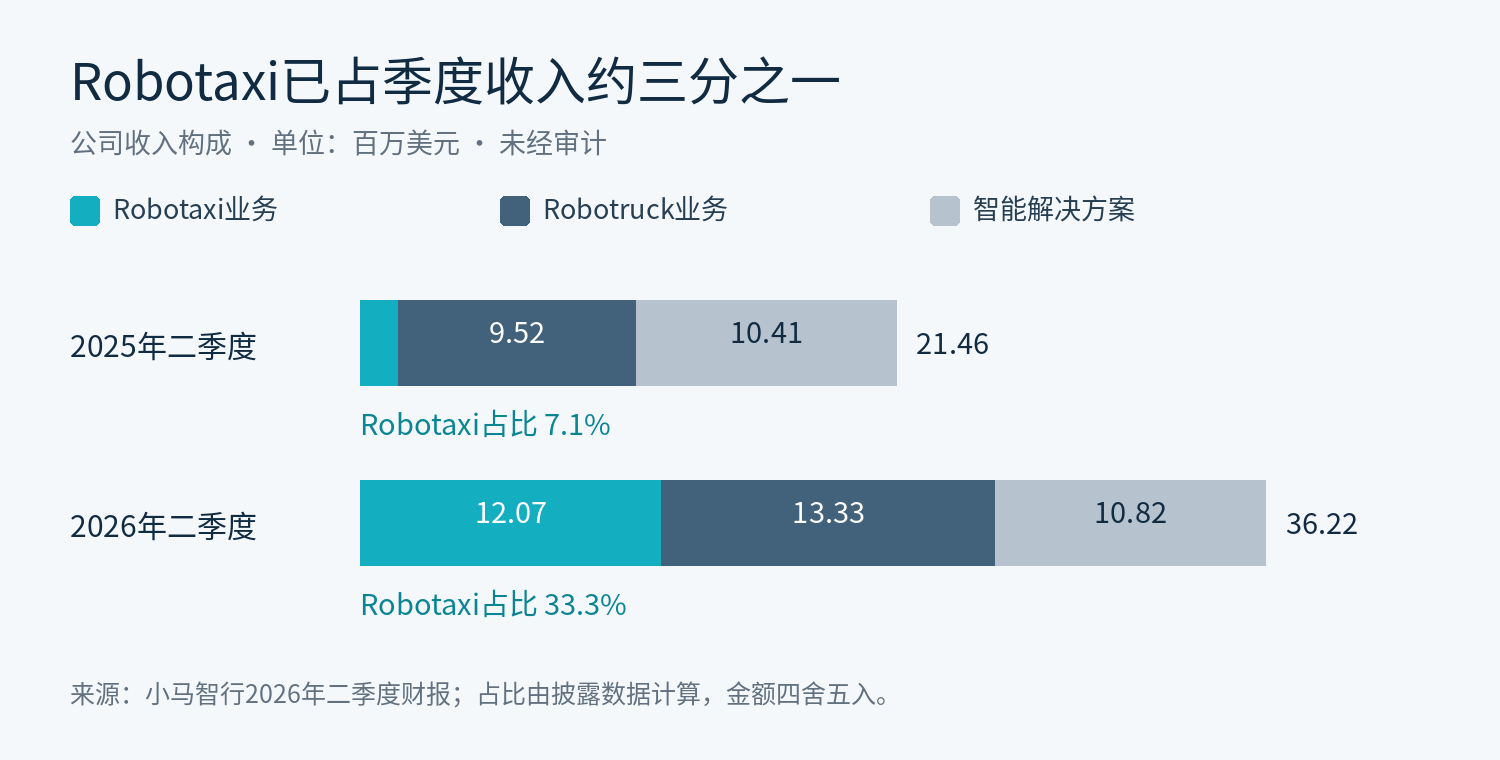
Prepared based on financial report data. Robotaxi business revenue includes contributions from co-built fleet deployment; the amounts in the chart are not purely fare revenue.
The company disclosed that passenger-paid revenue in the second quarter grew 849.3% year over year, and that revenue contributions from the co-built model both domestically and internationally also increased compared with the first quarter. However, this quarter's announcement did not further break down the $12.073 million fully into vehicle sales, directly collected fares, and operating revenue sharing. Growth was rapid, but how large each type of revenue is still requires more detailed disclosure.
These revenue streams cannot be extrapolated forward in the same way. Vehicle sales revenue changes with delivery batches; operating revenue sharing depends on how many paid trips the vehicles generate after going online and the contractually agreed percentage. How many vehicles are initially deployed in a new city mainly affects delivery scale; whether the vehicles can frequently take orders afterward is what affects ongoing revenue.
A single delivery can boost revenue for the quarter, but whether money can continue to come in afterward still depends on how well this batch of vehicles performs. As paid operations expand, vehicles that have already been delivered also have the opportunity to continue contributing revenue shares. London has not yet announced the number of vehicles or the revenue-sharing ratio, so it is difficult now to calculate how much revenue the city can bring.
More than 2,000 vehicles, still several steps from generating money
In August, the two sides announced plans to deploy more than 2,000 Robotaxis across five European cities. This scale covers multiple cities and subsequent deployment, and cannot all be attributed to London, let alone counted as already delivered and recognized revenue. As of June 30, Pony.ai's global Robotaxi fleet was 1,975 vehicles, and the company's year-end target is more than 3,500. The actual fleet, the annual target, and the scale of the European partnership are three different measures.
Zagreb provides a realistic sequence of progress. Verne launched commercial service in April, and when it connected to Uber in August there were still licensed operators in the vehicles; on September 1