 Physix Frontier
Robots Start Doing the Business Math
Robots Start Doing the Business Math
Industry Watch October 4, 2026
AGIBOT shipped more than 8,600 units in the first half of the year, Tesla adjusted chip memory for Optimus, and the open-source humanoid robot RP1 debuted at IROS. Put these changes together, and we see the robotics industry facing the same question: how to turn technical capability into a product that can charge continuously.
For investors, shipment rankings are worth watching, but how long customers are willing to use the machines and how much it costs a company to service one robot are even more worth asking about.
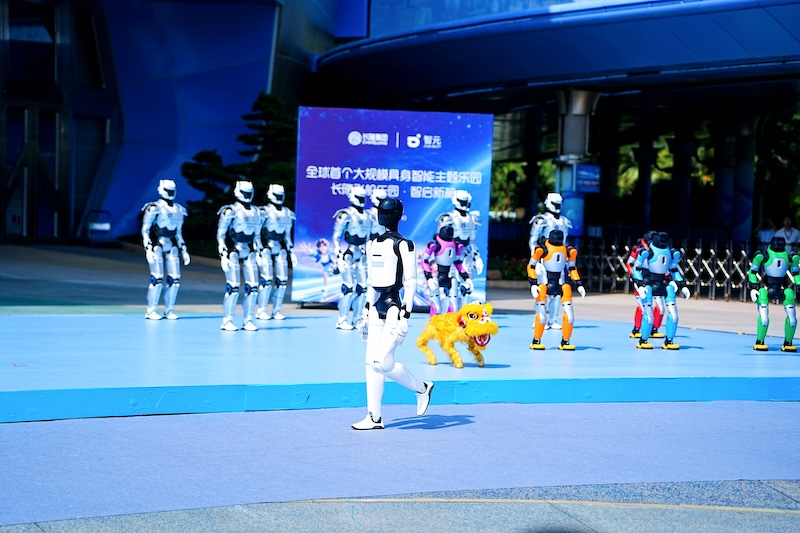
AGIBOT robot on display at the Chimelong park
01.
After AGIBOT Takes the Top Spot
Shipments Depend on Customer Repeat Purchases
In the first half of 2026, global humanoid robot shipments approached 25,000 units, up 432.1% year over year. Based on the currently disclosed IDC methodology, AGIBOT shipped more than 8,600 units, about 35% of the global total, ranking first.
This scale gives the supply chain a more concrete demand outlook. Whether components such as joints, sensors, and batteries can generate continuous orders will affect the pace at which suppliers expand production.
But shipment volume cannot be directly converted into profit. We care more about whether machines keep running after delivery, whether customers place additional orders, and whether after-sales service consumes a large amount of labor. Repeat purchases and collections are what make scale advantages more convincing. If customers only rent machines for short-term events, revenue sustainability differs from long-term tasks in factories, and valuations should treat them separately.
02.
Tesla Adjusts Memory
Mass Production Starts with Per-Unit Cost
Tesla initially planned to cut AI5 memory from 144GB to 72GB, then adjusted it to 96GB; for AI6, it plans to reduce memory from 216GB to 144GB. These configuration changes target Optimus mass production needs and remain part of production planning.
What we see is that as robots move toward mass production, chip configurations must also accept constraints from cost and supply capacity. Whether capacity can be reduced ultimately depends on task performance, latency, and stability. The amount saved per unit multiplied by actual delivery volume is the estimable cost change; rework caused by performance loss should also be included.
For the memory supply chain, the increase in robot numbers and changes in per-unit usage must be calculated together. Whether shipment growth can offset configuration shrinkage determines how large the incremental demand is. Treating planned capacity directly as procurement volume can easily overestimate the market.
03.
Patent Share Exceeds 60%
Technical Barriers Depend on Quality
Based on data from the world's five major intellectual property offices, in the first half of 2026 China accounted for 60.8% of humanoid robot-related patents and 66.3% of robot foundation model-related patents. Chinese companies' technology footprint is becoming denser.
But patent share cannot directly prove a company's competitiveness. Recent statistics are also affected by patent publication timing. We will continue to look at whether key patents are granted, which products they cover, and whether customers can easily find alternatives.
Only technology that can protect products and support delivery has a chance to form a commercial moat. Patent counts are worth tracking, but value still has to return to specific companies and specific products.
04.
RP1 Goes Open Source
How Does the Developer Ecosystem Monetize?
RoboParty showcased RP1 at IROS and plans to gradually open motion control, simulation environments, development tools, and the PartyOS foundation. More open-source details are expected to be announced in October, with subsequent software and hardware releases and mass production plans scheduled for the fourth quarter.
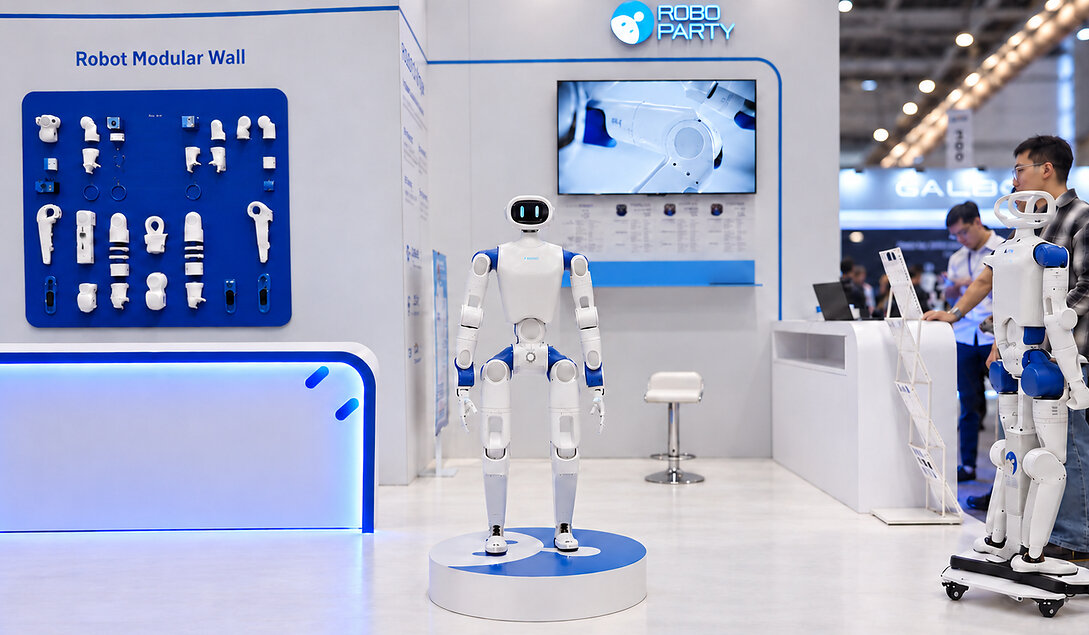
RoboParty RP1 display image
What we focus on is whether this platform can let development teams reduce investment in repeatedly building hardware and tools and move faster into task training and application development. The content planned for release still needs to be verified through actual launches.
Open source can attract developers, but revenue depends on products and services enterprises are willing to buy. Hardware sales, technical support, deployment and maintenance—whoever can form stable payment is closer to sustainable operations. Community activity and developer purchase conversion should be observed together.
05.
Scenic Areas Become Testbeds
After Deployment, Look at Operating Efficiency
Yibin Shanhu Tiandi has already placed robot scenarios such as inspection, delivery, and entertainment interaction into public spaces. Operator Yuanche Zhiyuan is trying to integrate equipment, platforms, and scenario services, and use operational data to improve capabilities.