 Physix Frontier
Hesai Partners with Amap: Can a Software Business Grow Beyond Lidar?
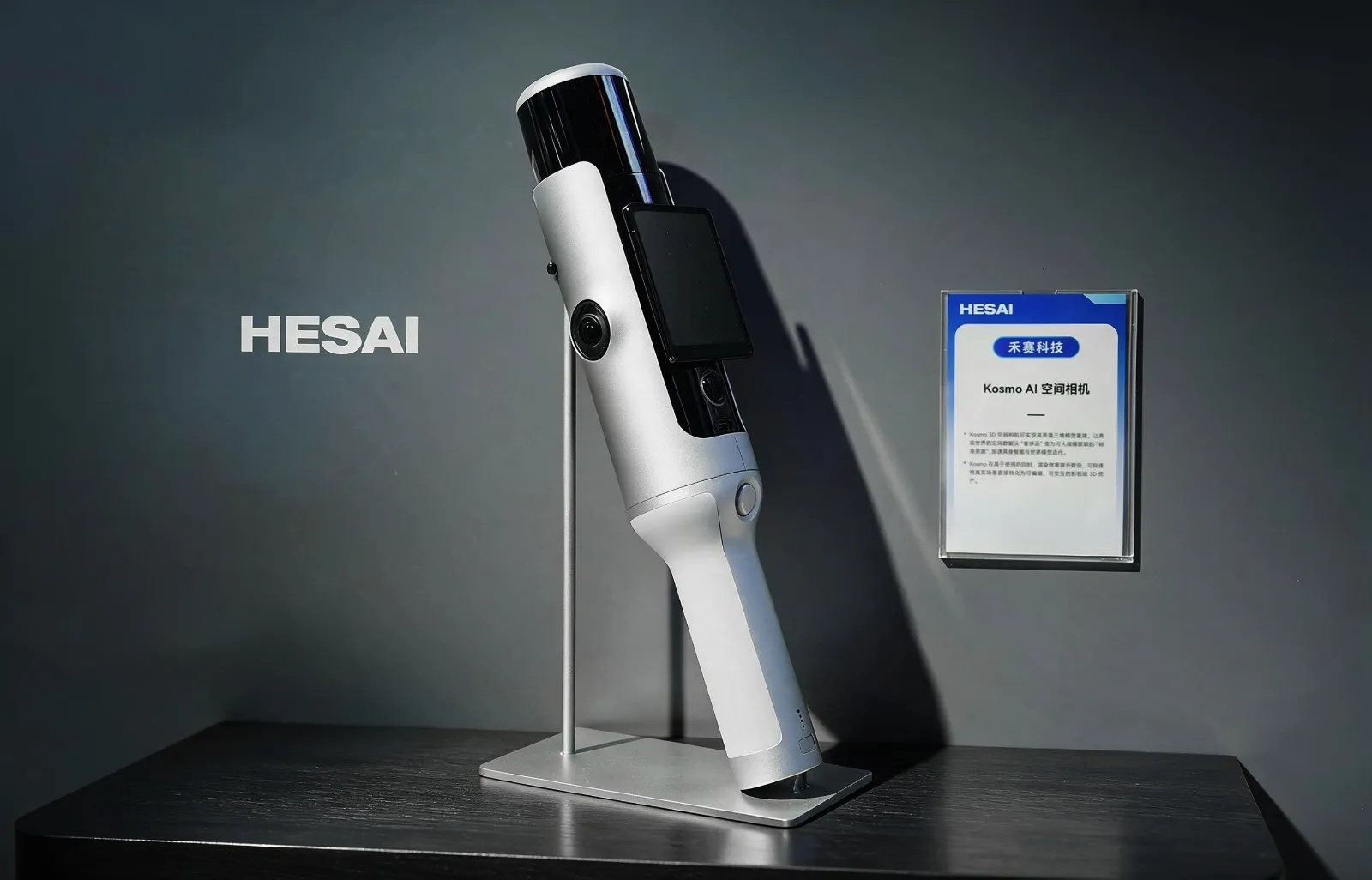
Photo of the Kosmo AI spatial camera booth. Source: Hesai official website, July 18, 2026.
On September 22, Hesai and Amap announced a strategic partnership at the Yunqi Conference. Hesai provides Kosmo's spatial capture and 3D reconstruction capabilities, while Amap provides maps, location services, and computing power support.
The partnership already has two concrete outcomes. According to Hesai's official website, the 3D reconstruction results for the "Zhongmeishuguan" and "Piaofeng Gallery" have gone live in Amap's "Flying Street View" related scenarios. Museums, commercial complexes, theme parks, and convenience stores are within the scope the two sides plan to expand into.
This gives Hesai a path closer to ordinary consumers beyond selling sensors. But for consumers to browse 3D spaces on Amap, there is still a business case standing between that and Hesai earning sustained software revenue.
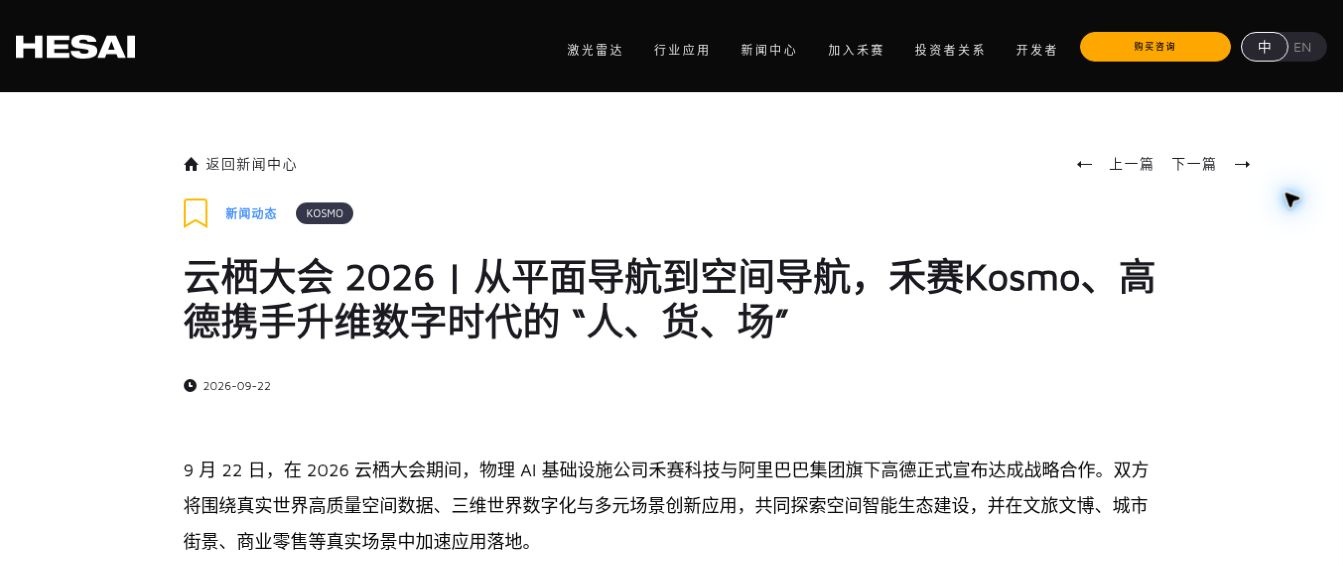
Screenshot of the partnership announcement on Hesai's official website, retaining the title, date, and scope of cooperation. Published on September 22, 2026.
Comment 1: Amap Brings the Entry Point, but Who Pays Still Depends on the Contract
Kosmo combines lidar with image capture, then uses algorithms to reconstruct real environments into browsable 3D spaces. Hardware handles data acquisition, while software and cloud services handle processing, storage, and delivery of the results.
Amap's value lies in providing usage scenarios for these results. A gallery's 3D model can enter users' decision-making process before travel, and malls and stores may also use it to showcase interior spaces. If merchants gain more visits or lower display costs as a result, there is a reason to pay.
However, the public partnership announcement did not disclose procurement amounts, revenue-sharing ratios, or who pays. Amap is a content display entry point, which does not mean Amap bears all collection costs, nor can the platform's user scale be treated as Kosmo's paying user count.
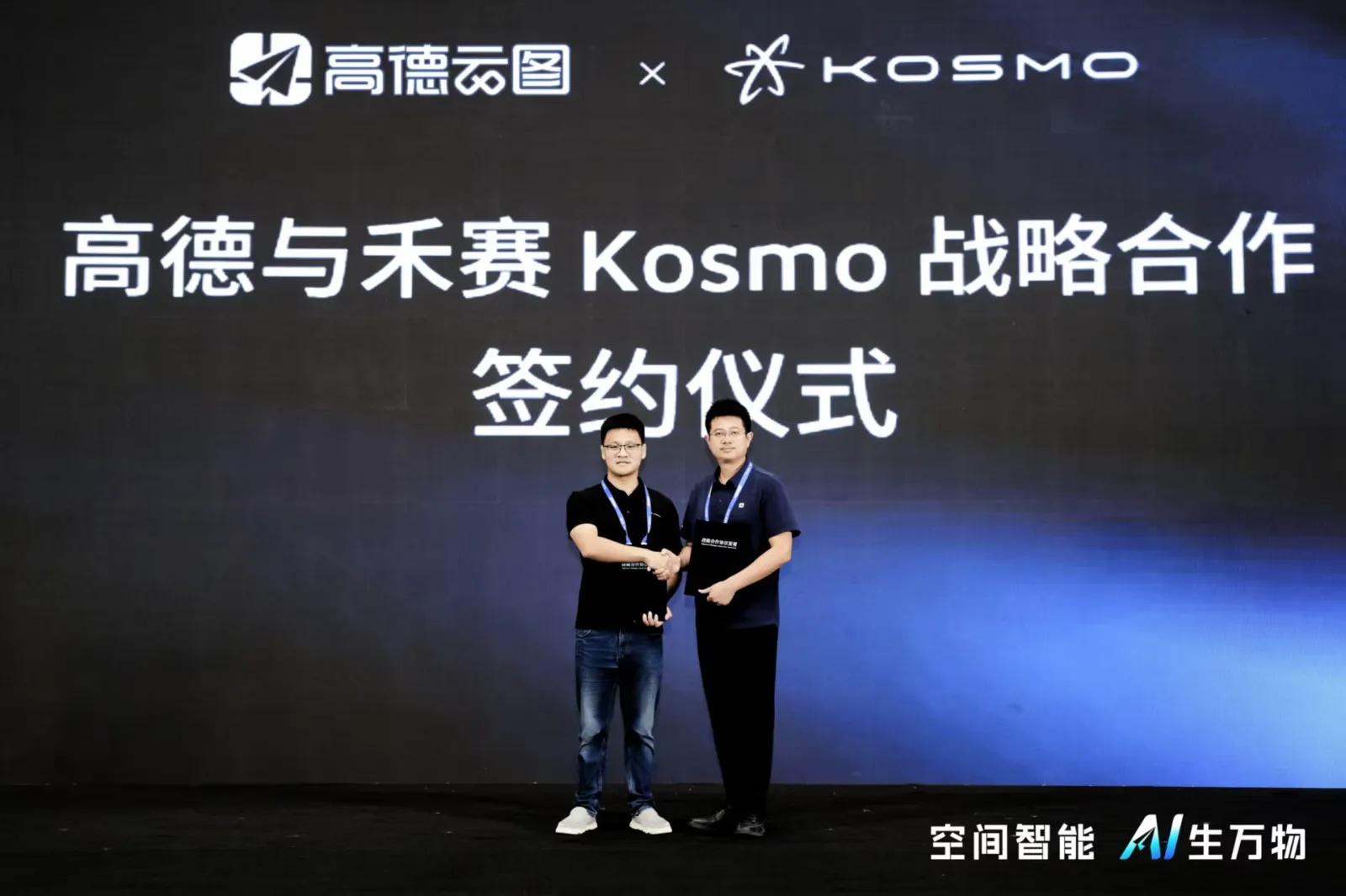
Signing ceremony for the Hesai-Amap partnership. Source: Hesai official website, September 22, 2026.
Commercially, it is worth distinguishing two types of revenue. One-time venue modeling ends when the project is delivered; only when merchants continuously purchase model updates, cloud management, and distribution services can recurring charges form. Two venues going live proves the partnership has results, but renewal capability still needs to be verified through subsequent contracts and collections.
Comment 2: Software Revenue Is Worth Anticipating, but Forecasts Must Be Read by Category
Hesai's unaudited second-quarter financial report released on August 18 stated that Kosmo delivered initial prototypes in July and received orders from humanoid robot companies including Galbot, with revenue expected to begin contributing in the third quarter. This is still the company's expectation for the timing of revenue recognition.
The report also raised the 2026 SGI revenue guidance to 200 million to 300 million yuan, expected to be about 100 million US dollars in 2027, with break-even that year. SGI is the company's strategic growth business, including Kosmo and robot power modules, so the entire guidance cannot be attributed to Kosmo alone.
Software and cloud services offer Hesai the possibility of recurring charges, but costs must also be counted. Reconstruction requires computing power, models require storage, and complex scenarios may require manual inspection. Malls changing layouts and stores changing displays will also bring re-collection and update costs.
Therefore, whether a rising share of software revenue can improve profits depends on both the processing cost per scenario and customer retention. If revenue mainly comes from customized projects requiring substantial manual services, profit margins may not improve like standard software as scale expands.
Comment 3: RoboSense Also Has a Spatial Camera, but Comparisons Must Come Down to Products and Revenue
RoboSense has already expanded its business along another path. Its interim results disclosed on August 26 show revenue of 1.020 billion yuan in the first half of 2026, up 30.2% year over year; lidar sales for robots and other applications reached 282,600 units, up 510.4% year over year. This category includes multiple applications and cannot all be understood as humanoid robots.
Its AC2 spatial camera integrates lidar, dual RGB cameras, and inertial sensors, targeting tasks such as robot manipulation, 3D modeling, and data collection, and comes with AC Studio development tools. RoboSense's plan in its interim announcement is for the spatial camera to begin customer delivery by the end of the third quarter and enter full mass production in 2027.
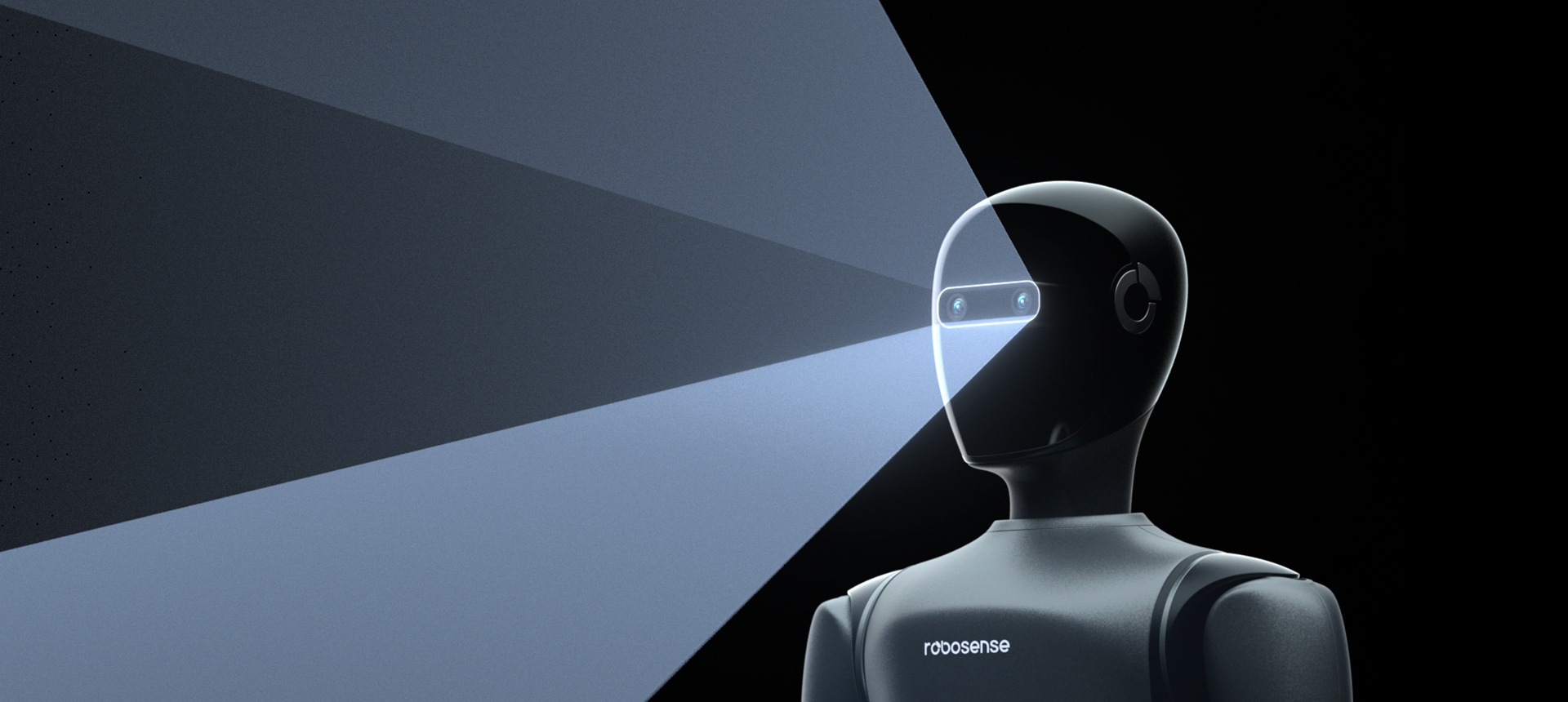
Product illustration of RoboSense AC2 from the official website, showing robot perception applications. The official page does not indicate a publication date; verified on October 6, 2026.
From public products, Kosmo emphasizes processing real scenes into 3D assets and then making them available to different customers through a cloud platform; AC2 emphasizes providing synchronized depth, image, and motion information to robots and collection systems. Both involve spatial data, and their product uses overlap, so sales and prices cannot be directly compared as if they were the same type of camera.
For Hesai, the advantage brought by the Amap partnership is an additional application entry point, with the opportunity to extend 3D reconstruction into commercial display. For RoboSense, existing robot customers and sensor deliveries are the foundation for promoting its spatial camera. Development tools can promote hardware adoption, but open-source tools themselves cannot be counted as software fee revenue.
So, the Amap partnership