 Physix Frontier
As Stock Price Halves From Its Peak, Momenta Targets Thousands of Robotaxis Next Year, Advancing on Three Fronts: Dubai, Europe, and Japan
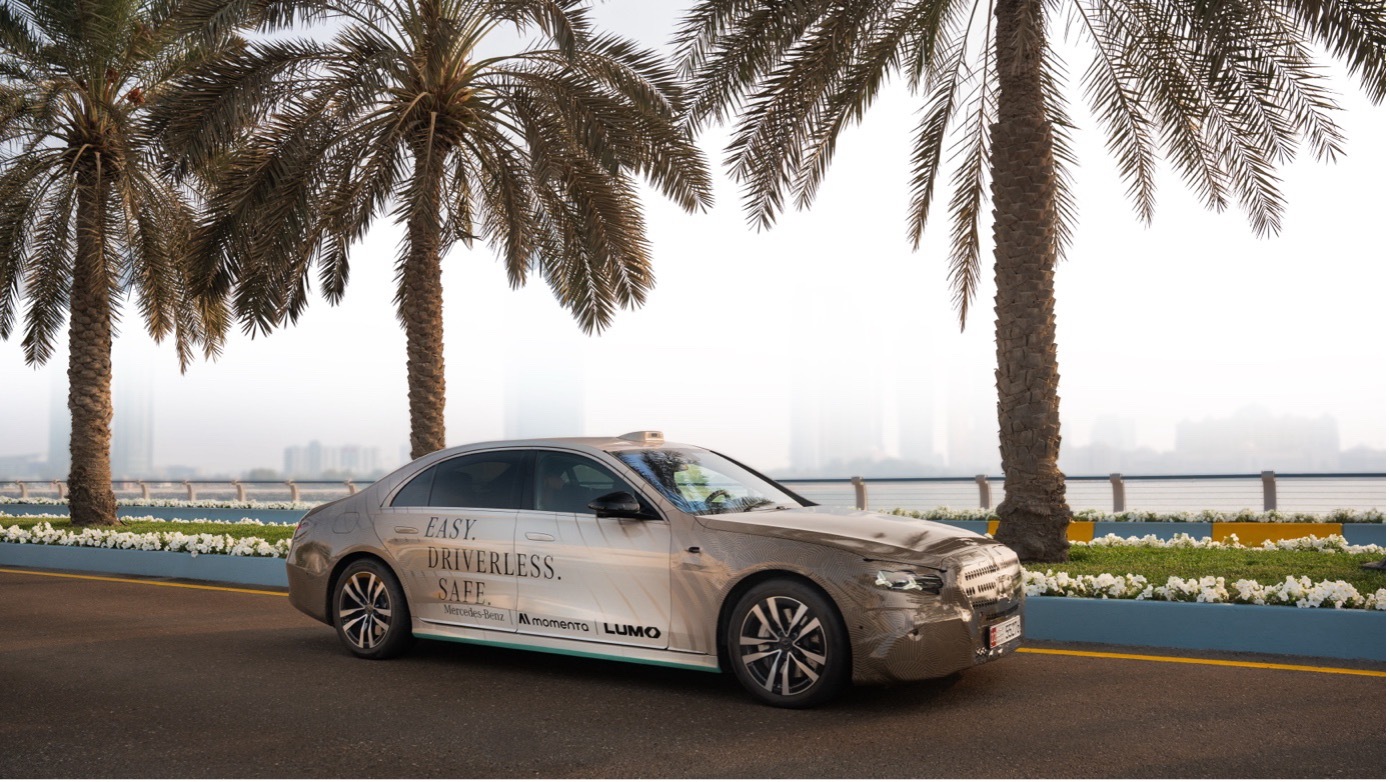
Official website image of the Mercedes-Benz S-Class Robotaxi. Source: Momenta official website, December 9, 2025. Official website source
According to a September 30 interview by Reuters with Xie Shuo, General Manager of Momenta's (6880.HK) Robotaxi business, the company has laid out an aggressive L4 expansion timeline: it currently has over 100 Robotaxis deployed globally, will expand to several hundred by the end of this year, and reach several thousand by the end of 2027; geographically, it will enter Dubai next year, is in talks with multiple European cities, and has listed Japan as a priority market. Its testing footprint already covers five Chinese cities, Munich, and Abu Dhabi—among them, Munich just obtained a Germany-wide urban road L4 testing permit from the KBA in July this year, while Abu Dhabi already has the S-Class Robotaxi project in partnership with Mercedes-Benz and mobility platform Lumo.
Comment 1: Who benefits, who gets squeezed
The timeline directly benefits Momenta's "data flywheel" narrative: with more than 1 million mass-production passenger vehicles equipped and more than 210 designated models, data feeds back into L4, a structural advantage that pure self-operated fleet players (WeRide, Pony.ai) do not have; what gets squeezed is the pure self-operated model—if Momenta can prove unit economics in Europe and the Middle East through an asset-light "technology licensing + cooperative operations" approach, the valuation premium of the self-operated heavy-asset route will be compressed.
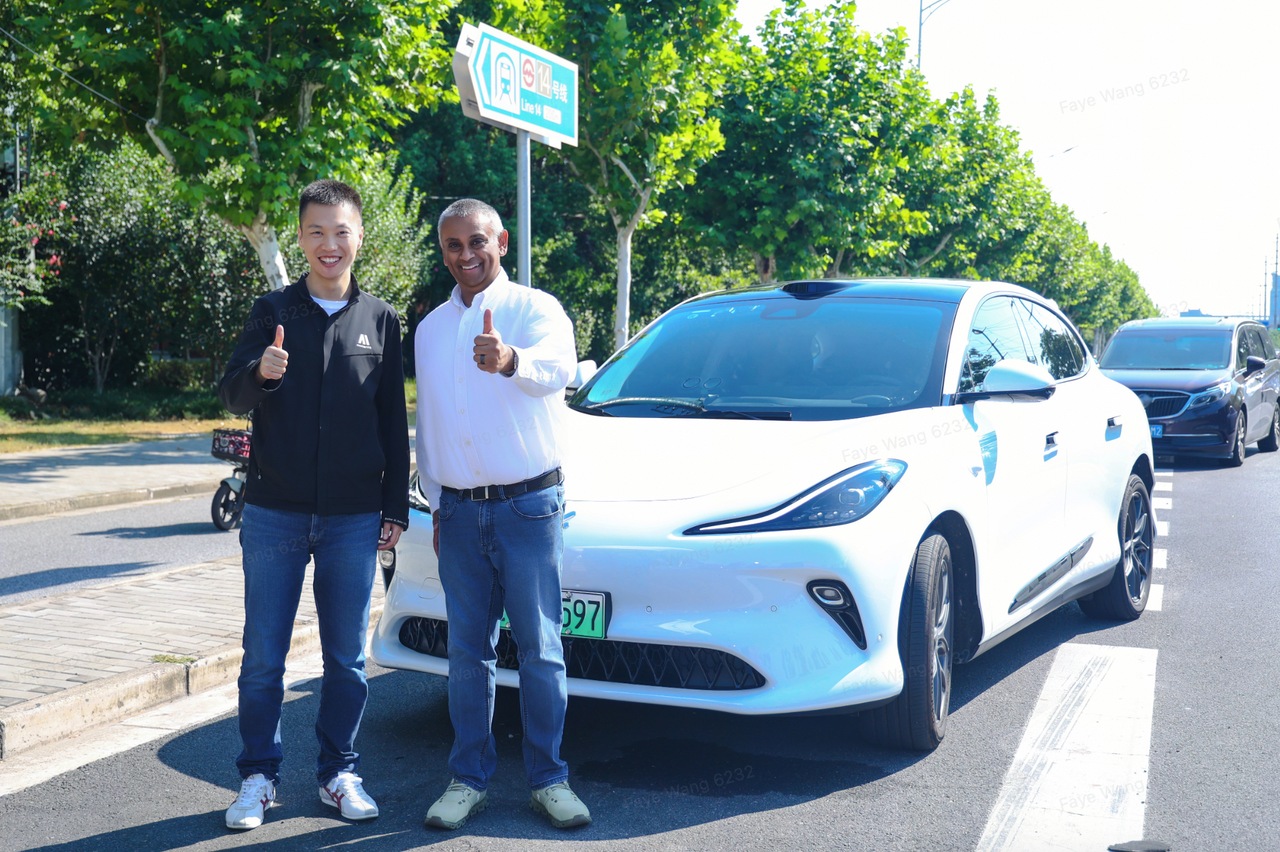
Announcement image for the Uber and Momenta Munich project, with Cao Xudong on the left and Uber CFO Prashanth Mahendra-Rajah on the right. The photo location is not labeled. Source: Momenta official website, September 8, 2025. Official website source
Comment 2: How to view commercialization
Momenta's approach to Robotaxi is a different species from Waymo and Baidu Apollo Go. In the prospectus's own words: under the three-party division-of-labor model, the mobility platform handles customer acquisition, dispatch, customer service, and fleet operations, automaker partners provide vehicles, and Momenta only delivers the autonomous driving system—it does not buy cars, does not run a driver-side app, and does not touch offline operations and maintenance. In essence, it turns Robotaxi into a "technology licensing + revenue sharing" business. By comparison: Waymo and Apollo Go operate their own fleets and build their own user entry points, so every new city is a heavy-asset investment; WeRide is a "platformized" heavy-asset player, selling complete vehicles to downstream operators and governments; Pony.ai is also shifting toward a "co-building model," with partners such as OnTime assuming fleet assets—the industry is in fact converging collectively toward asset-light models, while Momenta has had this structure from day one. Another cost-side advantage is "reuse": Robotaxi and mass-production passenger vehicles share the same software algorithms and sensor suite, requiring no expensive retrofitting. Industry-wide, the per-vehicle cost of a Robotaxi is generally in the 200,000-300,000 yuan range, and because Momenta's sensor configuration is more streamlined, its per-vehicle cost is expected to be lower.
Partner landscape (disclosed in the prospectus, all formal frameworks rather than intentions): on the mobility platform side—Uber (Europe, with Munich as the first stop, system integration completed and road testing underway), Grab (Southeast Asia, strategic investment plus cooperation in December 2025), Xiangdao Chuxing (SAIC-affiliated, already obtained Shanghai's driverless operations permit in January 2026); on the automaker side—Mercedes-Benz is both a shareholder and the co-developer of the Abu Dhabi luxury Robotaxi project (with Lumo, S-Class), and this year will also deploy the world's first mass-production vehicle Robotaxi fleet in Shanghai with SAIC. In the shareholder list, seven automakers—SAIC, General Motors, Mercedes-Benz, Toyota, BYD, Hyundai, and Chery—plus two platforms, Uber and Grab, themselves form a binding structure of "customers are also shareholders."
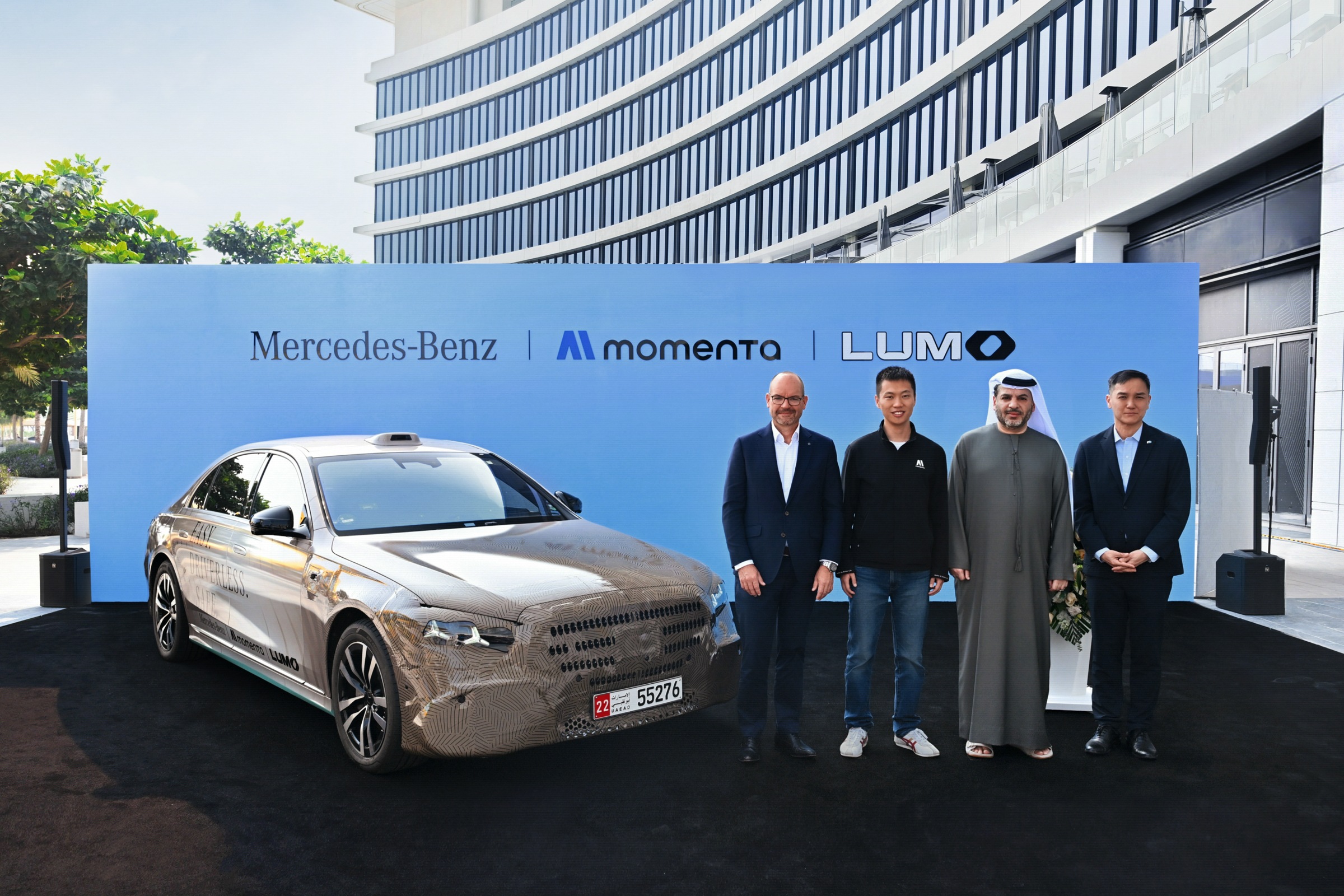
Photo from the Abu Dhabi cooperation announcement by Mercedes-Benz, Momenta, and Lumo. Source: Momenta official website, December 9, 2025. Official website source
So the commercialization implications of this "several thousand vehicles" timeline should be read this way: Momenta's marginal cost of expansion is far lower than that of self-operated players—each new